Kerala Health Care sector needs reform

Kerala has long taken pride in the strength of its public healthcare system. However, incidents during the previous government’s tenure revealed a system under severe strain and often poorly managed. Chronic shortages of funds have plagued public healthcare for years.

The new UDF government’s proposed alternative — if it can indeed be called one — is an insurance scheme offering coverage of up to ₹25 lakh for every family, though it remains unclear who exactly will be eligible. In effect, the government will be encouraging patients to shift from public hospitals to private ones. Such a move is likely to do more harm than good.
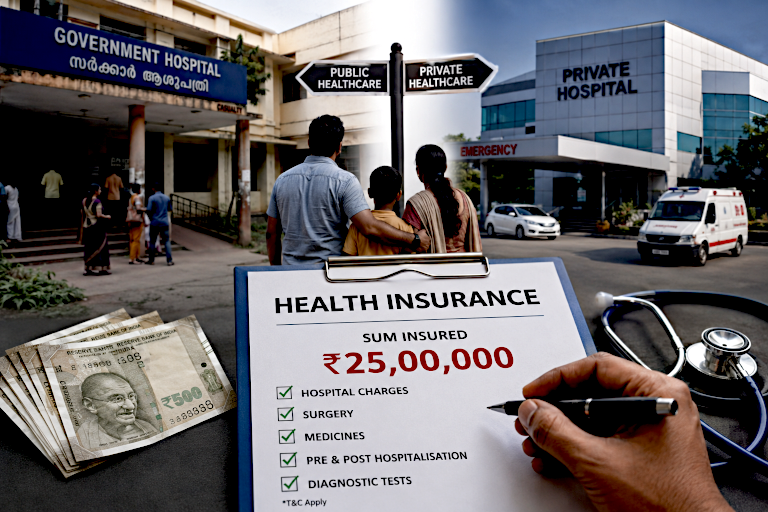
Health care

Private healthcare services are already expensive and, in many cases, exorbitantly priced. As demand increases, costs are bound to rise further. Insurance coverage can also reduce price competition, contributing to spiraling healthcare expenses.

It seems that the multi-national companies had sensed or managed to bring about the shift in health care sector from public to private sector.  They have brought hospitals even in medium towns. Several private hospitals are already notorious offering unnecessary procedures and over-charging patients. Now, the government will be aiding them to expand business.

The government hospitals in the State have best of doctors, nurses and paramedics. On the other hand, doctors who studied in dubious medical colleges in India and abroad find placement in some private hospitals. Poor and less-informed patients are especially vulnerable to being misled in such institutions. While government hospitals may suffer from neglect and shortages of resources, patients there are generally less likely to be subjected to unnecessary procedures and medication. Addressing shortages of funds, infrastructure and staff should therefore be the primary responsibility of the new Kerala Health Minister, K. Muraleedharan. If universal health coverage is indeed the goal, it would make more sense to invest the insurance premium funds directly into strengthening government hospitals.

Insurance-based healthcare may also burden poor and less-educated patients with bureaucratic hurdles. Insurance companies could deny claims, demand prior approvals or insist on complex documentation before treatment is provided. In some cases, patients may even need legal assistance. Anyone familiar with motor vehicle insurance knows that workshops often charge differently for insured and uninsured vehicles. The same pattern is likely to emerge in healthcare billing, ultimately driving up insurance premiums. If the government proceeds with its “Indira guarantee” for health insurance, it may soon find itself facing ever-increasing costs.

Ayurveda and Homeopathy

Kerala’s healthcare landscape is also distinguished by its large number of institutions offering treatment under Ayurveda, Homeopathy and Siddha systems. Medicines used in these traditions produce fewer side effects. At the same time, there is a growing view that some of these systems — particularly Homeopathy — lack a scientific basis.
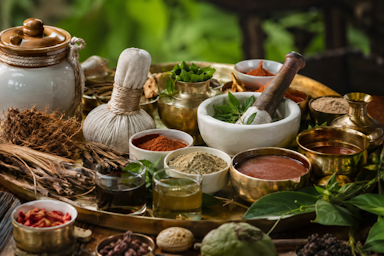
Ayurveda

Ayurveda continues to attribute disease to imbalances in Vata, Pitta and Kapha — concepts associated with movement, metabolism and structural stability — and does not fully incorporate the modern scientific understanding that germs cause disease. The government should therefore take steps to modernise Ayurveda by integrating contemporary medical knowledge into its curriculum. Even if traditional concepts such as Vata, Pitta and Kapha are retained, modern scientific understanding should be logically connected to them.

Ayurveda, Siddha and Unani cannot easily be dismissed as pseudosciences, since they evolved through centuries of observation, experimentation and inference — methods that broadly align with scientific inquiry. The same cannot be said of Homeopathy. There is no convincing scientific evidence that highly diluted homeopathic remedies are effective beyond the placebo effect. Moreover, many homeopathic medicines have not undergone rigorous testing. Many practitioners are known to mix modern medicines with homeopathic medicines to show results.

The government should therefore commission independent studies to evaluate the efficacy of homeopathic medicines using modern research methods. Until such studies are completed, public expenditure on homeopathic institutions should be curtailed. No new homeopathic dispensaries, hospitals or medical colleges should be established. Medicines used across AYUSH systems should undergo rigorous scrutiny, and any harmful substances should be purged  from the official Materia Medica.

Any attempt to modernise AYUSH systems and their curricula is likely to face opposition from sections of the modern medical establishment. However, it is worth remembering that allopathy itself evolved over time into what is now considered modern medicine.
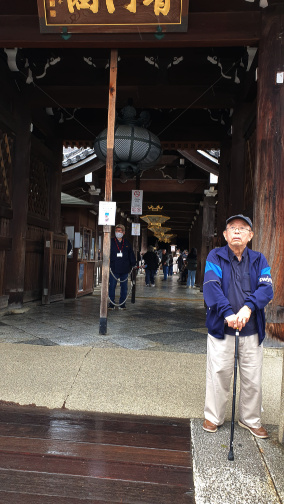
Care for the elderly: Satheesan sets out plans

A Japanese elder in front of a temple
An elder in front of Japanese temple

Kerala Chief Minister V. D. Satheesan has announced plans to establish a dedicated government department for the elderly to carry out new schemes to support senior citizens. Though he has not given details of the programmes, he mentioned that it would be modeled on the Japanese system.

The main features of the Japanese model are mandatory long-term care insurance (LTCI), public pension scheme, medical care system for older senior citizens and community based integrated care system. These take care of 90 per cent of medical and personal care needs of people aged above 65. Many of the services reach their doorsteps. The elderly will have to get a certificate based on their level of frailty (similar to disability certificates) to obtain full medical and personal care services. Frailty and prefrailty among older people are assessed and steps to prevent progression to frailty.

Japan is the most aged country in the world. Over the last 75 years the percentage of elderly people among the population in the country has jumped from five per cent to nearly 30 per cent (more than 36 million) and is expected to plateau around 40 per cent in another decade or two.

In Kerala, about 17 per cent of the population (approximately 6.5 million) is now above 60 years of age. This is projected to cross 22 per cent by 2036.

One of the major Challenges to the Chief Minister, who also holds the Finance Portfolio, will be to secure funds for the Department and its programmes. Even a developed country like Japan is struggling to find funds for its programmes. Kerala is currently finding it difficult to pay old age pensions which is often in arrears. This puts many older people in great hardship. One thing that Mr. Satheesan should do is to make welfare pensions a priority and make its payment regular. Now, the first treasury restrictions fall on disbursement of welfare pensions. Instead, welfare pensions should have first claim on budgetary funds.

The second issue will be insurance costs. In Japan, LTCI insurance is covered by premiums paid by citizens during their working years and taxes. Insurance premiums are going up. This could ultimately become a problem for Kerala. Already, multinationals are buying up hospitals in Kerala and insurance is spreading its wings. As much of the healthcare comes under insurance umbrella, much of the competition will disappear and costs will keep going up. Government hospitals will be weakened. The State government will have to keep an eye on this while devising the schemes.

A promising alternative lies in strengthening community-based interventions. Mr. Satheesan has been liberal in granting a ₹ 3000-hike in monthly honorariums of Asha workers. He may be planning to use their services for his schemes for older people. His ultimate test will be finding sustainable funding for meaningful, long-term schemes for Kerala’s senior citizens.

Vandana Das Bill— Will Tharoor bat for the Patients too?

The Kerala Government recently enacted an amendment to the Kerala Healthcare Service Persons and Healthcare Service Institutions (Prevention of Violence and Damage to Property) Act that prohibits violence against healthcare service persons and seeks to prevent damage and loss to property in health care service institutions.

Patients

Now, Shashi Tharoor, Member of Parliament from Thiruvananthapuram, is moving a similar legislation as private members’ Bill in Parliament, nicknamed Vandana Das Bill.

These legislation are unnecessary and in certain respects negate equality before law, enshrined in the Constitution.

It is notable that the Centre had proposed a similar legislation in 2019. However, after obtaining public opinion, the Ministry of Health and Family Welfare decided to dump the legislation. The Home Ministry, during inter-ministerial consultations over it, had stated that there cannot be a separate legislation to protect members of a particular profession, according to news reports in 2022.

Dismissing the need for a separate law to check violence against members of a specific profession, the Home Ministry said there should be no specific law for a particular profession, and the Indian Penal Code and Criminal Procedure Code were sufficient to deal with it.

It noted that over the time, members of other fraternity like lawyers and police might also demand for an exclusive law to safeguard their interests.

Though the Ministry did not say so, other groups such as journalists too could make such demands.

On a higher pedestal:
The enacted and proposed legislation place health service persons on a distinct legal position higher than the ordinary citizens. This is similar to prescriptions in Manusmriti that granted Brahmins elevated legal status. Indian Constitution does not recognise such treatment. In normal jurisprudence, a crime committed under emotional stress attracts lower punishment than a pre-meditated crime.

The parent Kerala Act was enacted back in 2012, following protests by doctors. The present amendment was to enhance period of imprisonment and fine and include more categories of health care personnel under the protection of the law. They included security personnel who, in many cases, are outsourced by the hospitals. There is also the provision that the offender shall pay the health care service institution twice the amount of purchase price of medical equipment damaged and loss caused to the property as compensation. It is not clear why the health care service institution should get such a compensation which is not available to other institutions. Even if old or non-working equipment is damaged, it may be possible to recover such damages and this could lead to misuse of the legislation.

It is notable that the Kerala Amendment (enacted as an Ordinance with Bill to replace it before the Kerala Assembly now) was brought against the background of tragic murder of a young doctor Vandana Das at Kottarakkara Taluk Hospital by a patient, brought in by the police. The motive was not clear and it was suspected that the assailant was mentally unstable or addicted. The only thing was that the crime took place in a hospital.

Dr. Tharoor also cites this incident in his statement of objects and reasons for his Bill. The narrative is bogus. Dr. Tharoor is just cashing in on the protests by doctors and public sympathy for the family of the deceased. The incident took place basically because the police, security staff or others failed or did not care to restrain the attacker who was using just scissors for the attack. It was not related to an issue over treatment.

Enforcement is the key
Legislators often propose special legislation and enhanced punishment, for crimes that attract public protests or concern, to deflect attention from failures on the enforcement front. Though the Kerala Act was in force since 2012, it is said that hardly any successful prosecution had taken place so far, and the cases of violence against health personnel are on the increase.  So, the political ploy to neutralise public concerns is to bring new legislation or increase of the quantum of punishments. Examples to this are the Goonda Act and modification of the law and quantum of punishment for sexual violence against women. However, goondaism or violence against women has not come down.

Exploitation of patients
Violence against hospital staff have increased against the background of increasing exploitation of patients by hospitals. If indeed special legislation is needed for healthcare personnel, what the government and Dr. Tharoor should answer is why similar special legislation is not being proposed for protection of patients also. Recently, the High Court had ordered arraignment of several doctors after the court found evidence that a patient was left to his death by the doctors for harvesting of his organs.  

It is not easy for patients or their relatives to bring doctors to book in such cases or medical negligence. In this case, it became possible because a doctor came forward to exposes that and several other cases. The number of cases he is citing is not small.

A patient in ICU or in the operation theatre is highly vulnerable. Enhanced punishments had been specified for sexual crimes by those in authority. Is not similar provisions needed in the case of doctors and nurses too for wilful negligence or trafficking in human organs, stem cells or embryos?

Link to original Act: https://www.indiacode.nic.in/handle/123456789/12382?view_type=browse&sam_handle=123456789/2516

Covid 19: Kerala’s claims come to a nought

Graph showing trend of Covid 19 cases in Kerala (source: GoK).

Kerala’s claim of lower number of deaths owing to Covid 19 among States in India has come to a nought.

Kerala’s deaths on account of Covid 19 per million population crossed 100 by the end of January 2021 with more than 25000 cases reported per million population. The deaths per million at the end of December 2020 was 84. This jumped to 105 by January 31, 2021. The total number of confirmed cases crossed the one million mark on February  14, 2021. 

Nearly half of the States and Union Territories in India have these figures lower than that of Kerala, as per officially-reported numbers. They include Uttar Pradesh, Telengana, Bihar and Madhya Pradesh.

Haryana, Maharastra, Punjab and West Bengal had similar number of deaths per million population to that of Kerala last month.  By now, Kerala has surpassed them also.

Active cases remain high Kerala while cases in other States barring Maharastra have come down. Some States are not reporting deaths anymore.

The official explanation for continuing higher number of infections in the State is that it had been able to contain spread of the disease significantly in the first six months while the disease had spread to a large proportion of the population in many other States. The latter had thus achieved some kind of herd immunity while the vast majority of Keralities are yet to be infected. (This will give some advantage to Kerala in the end if vaccination could stop the disease from spreading further). Sero-prevalence studies confirm this. The numbers of unreported infections were very high in other States, compared to Kerala.  The national average in this respect is nearly double that of Kerala, according to studies conducted in December 2020-January 2021. (11.6 per cent of adult population in Kerala was found to be infected while the national average was 21.4 per cent.)

However, this casts doubts about the claim that case fatality rate in Kerala, which currently stands at 0.4 per cent, is lower than in other States. Many other States would have had similar case fatality figures if most of the cases had been reported. For example, the cases reported per million population in West Bengal is below one fourth of Kerala and case fatality rate was 1.78 per cent last month end. But the deaths per million population was around the same as that of Kerala. (While Covid 19 cases could easily go unreported, deaths get reported to a large extent.)

Healthcare is not a police task

Dancing by police to convey the message on precautions against Covid-19

The decision of the Kerala government to entrust contact-tracing for COVID-19 to police is ill-advised on several counts.

Heavy-handed measures will only generate public resentment and resistance, with some people even finding ingenious ways to dodge the restrictions.

The authorities think that strict rules and strong enforcement are needed to achieve their goals. However, it is better for them to remember that their rule making powers, as Erskine May said in respect of legislative powers of British Parliament, is limited by the willingness of the people to obey or people’s power to resist.

The police are a high risk group, as far as chances of spread of COVID-19 among them are concerned, owing to a host of factors. They already have to interact with people at close quarters. The tendency of many of them to abuse and manhandle people only adds to the risk. The condition of their camps and lay-out of their residential quarters could also contribute towards faster spread of the disease. At the same time, it is important to keep the force free of infections as their services are crucial in other areas as maintenance of law and order, prevention of crime and emergency response. So, they should be kept out of the business of contacting potential COVID-19 patients. They are already dealing with a stupendous number of about 2.7 lakh cases in connection with enforcement of COVID-19 restrictions.

The government is entrusting the job to police not because they have nobody else to do the job. The staffs of many government departments are idling at home, with no salary cuts at these times. They could be deployed for the work. It was strange that government could not even find data entry operators for COVID-19 testing centres and had to recruit fresh when many typists and data entry operators of the government were sitting at home.

Healthcare is a civilian task for which even ‘civil’ police officers need not be involved.

Related links:

https://www.newindianexpress.com/states/kerala/2020/apr/15/record-40k-arrests-28k-vehicle-seizures-in-kerala-during-covid-19-lockdown-2130422.html

https://www.newindianexpress.com/states/kerala/2020/apr/20/gps-tracking-app-of-police-backfires-in-keralas-kasaragod-puts-covid-patients-in-a-spot-2132510.html

https://www.outlookindia.com/website/story/india-news-commandos-cordon-off-kerala-fishing-village-labelled-covid-19-epicentre/356366

COVID-19: another lock down may not be the best choice for Kerala

Corona virus

The rising numbers of COVID-19 cases in Thiruvananthapuram district, extension of lock down and increasing restrictions show that the government is failing contain the disease in the district.

The benefit from several of the restrictions is marginal while the impact on livelihoods is serious. Measures like holidays for banks on Saturdays have little benefit. The restricted working hours for shops selling provisions and groceries— where no demand-drop could be expected from fewer working hours, only serves to add to crowding, especially when home deliveries are banned.

The fast spread of the disease in the coastal areas was unanticipated especially in the absence of proper surveillance among the poor fishers. But the spread of the disease at Ramachandra textiles, Pothys and other showrooms, shops and markets and infections in hospitals could have been anticipated. The first cases at the hyper market, which also makes home deliveries, were known as back as in May.  About a month later, government stops home deliveries hitting every agency making home deliveries. As pointed out in an earlier post, home deliveries are safer than going around shopping, especially for the older people. On one hand, the government talks about reverse-quarantine, and on the other hand, makes it almost impractical for aged couples living alone to stay at home.

The government should apply Gandhiji’s talisman while imposing restrictions over COVID-19. It is fairly comfortable for the large population of government servants, teachers and their families and others drawing regular salaries in Trivandrum to be under lock-down. However, that is not the case with daily wage earners. The government has done nothing to provide financial assistance to them, other than releasing pension arrears for older persons.

Food assistance in the coastal region (mostly to fishers) is limited to five kg of rice and one kg of pulses. The population is denied protein-rich fish for consumption as they cannot go out to fish. If one goes without good food, one’s immunity may be compromised.

The lock-down in coastal villages may be beneficial to the urban centres (though that deprives them also of fish); but for fishers, it does not reduce crowding significantly. Interactions among neighbours are inevitable when there is hardly any home to ‘stay at home’. On a normal day, a significant portion of the population will be dispersed—fishing at sea or selling fish. Now, they are all packed together. It would have helped if widespread testing was undertaken and patients isolated and lock-down lifted in a week or two. However, testing is proceeding at a slow pace.

While the overall performance of Kerala is very good compared to most other States in managing the pandemic, the following deficiencies should be flagged.

Testing is inadequate and progressing at a slow pace. The fact that some COVID-19 cases are confirmed after the patient is dead goes to prove this. Now, the government has decided to replace PCR tests for discharge of patients with antigen tests. Antigen tests are less reliable than PCR tests and World Health Organisation (WHO) does not recommend it for clinical purposes owing to uncertainties regarding results. Apparently, the government is compelled to do so— there is already a daily backlog in respect of PCR test results.

In fact, the government has failed to set up adequate testing and treatment facilities to deal with a spike in COVID-19 cases during the past six months. Hence, the hospitals are now full and first line treatment centres with bare facilities are being set up speedily. There is shortage of personal to man the hospitals and facilities.  This is compounded by many doctors and health workers testing positive for COVID-19.

Now, government is thinking of a State-wide lock down. It is notable that the lock down at the national level as well as the triple lock down in Trivandrum failed to bring down cases. Activities in the agriculture and fisheries sectors and much of the service sector cannot just be stopped for long periods. It can even lead to food shortages and much misery.  Wider and effective enforcement of social distancing at work places, markets and functions and events may yield better results. Business should not be allowed in congested and crowded places and norms should be specified for online deliveries. Use of masks should become a habit when one steps out of homes.

Kerala already has a low case fatality rate from COVID-19. Facilities should be set up on a war-footing to deal with increasing number of cases and keep the fatality rate low.

Kerala slipping in containing Covid-19

Kerala is slipping in containing the COVID contagion. The extension of lock down in Trivandrum and elsewhere is indication of this.

What went wrong was the failure to enforce social distancing norms including wearing of masks and adoption of precautions relating to opening of malls and markets. The Trivandrum Medical College Hospital was showing signs of fatigue and weaknesses and even contributed marginally to local spread of the disease.

We already know that lock down only help to delay spread of the pandemic. The Kerala government is only repeating the failed model of Modi government by announcing lock down on the previous night. The government even moved an armed battalion to Poonthura to enforce the “triple lock down”. The results were immediately visible with a protest by fishers that threw all the social distancing to winds. Another round of protests could be expected if the government prevents fishers from going to sea for long to earn their livelihood, without giving them any monetary assistance. There will also be shortage of fish in the market.

The most laughable aspect of triple lock down in Trivandrum was the Collector’s order which said that people could call the police for grocery supplies to homes. She could not imagine that the police are ill-equipped for such a job without any system for receiving orders, billing and delivery. Moreover, as force that comes into close contact with people on an everyday basis, they are the riskiest group to undertake home deliveries.

To add to this drama, this week the administration had announced ban on home deliveries. After the COVID-19 crisis arose, many agencies were supplying milk products, provisions and groceries to homes efficiently. This was the safest method for supply of provisions and groceries, especially to senior citizens living alone. The administration stopped this overnight, forcing vulnerable groups to go to stores, groceries and sellers of meat and fish.

It is true that people working with a hypermarket making home deliveries from East Fort and getting their supplies from Tamil Nadu had tested positive for COVID-19. However, people were not widely informed of this. No restrictions were imposed on godowns, markets and hotels functioning in congested areas. It was notable that transmission occurred at a congested shop in Saphalyam complex which itself lack proper air circulation. The Palayam and parts of Chala markets are places where people will have to move in close proximity. Token system at the entrance and one way movements may reduce the problems to some extent, but that has not been tried.

Home deliveries are safer than people visiting large markets and stores. There is scope for godowns to operate from different locations. The only thing is that the government should stipulate minimum space for operations and other protocols for them. Similar is the case with hotels supplying parcels. They should have sufficient space for the kitchen and packing. Space left empty in the absence of diners could be used to expand the space available for cooking and delivery.

Recently, food delivery boys in Trivandrum had contacted COVID-19. Instead of banning deliveries in the light of developments like that, the administration should go for regular health check-up of such vulnerable groups, avoiding the easy way of shutting everything down. The economic impact and human tragedies resulting from shut downs could be large. Lock downs are not something you can use off and on.

Despite claims to the contrary, Kerala’s preparedness for dealing with the spreading diseases seems to be inadequate. This is at the root of current restrictions which destroys the livelihood thousands of people and possibly creates more victims than the toll from COVID-19. As days go by, Opposition to lock downs are bound to increase, besides number of those circumventing or breaking the restrictions.

One India goes for a toss

Montage from twitter.

ONE INDIA—we hear about that often during these Covid-19 times. But the disease is proving that we are far from achieving unity. Look at the following reports.

Karnataka Closes Kerala Border, 7 Die Due to Delayed Medical Assistance
Telegana Stops Issuing Passes to Migrant Workers and Others Returning from Maharastra, Gujarat and Andhra Pradesh.
Karnataka Bans Entry of People from Gujarat, Maharastra and Tamil Nadu till May 31
Kerala Stops Malayalees Returning From Other States at Border
1000 Buses from Rajastran Dispatched from Alwar Stopped at UP Bharatpur Border by UP Cops
40 Haryana Buses from Gurgaon with Stranded Migrants Were Sent Back by UP Police

Indian States were stopping their own people from entering the State on the ground that they were coming from Covid-hit red zone, not to speak of people from neighbouring States. The BJP Government in UP not only refused entry for buses from Congress-ruled Rajasthan but also from BJP-ruled Haryana. So, the migrant drama played out in UP was more than a Congress-BJP tussle.

Centre fails to lead
The Central Government did not intervene or coordinate movement of people wanting to return home for nearly two months now. All it did finally was to send some trains here and there without waiting for clearance from the States.  However, this did not address even part of the problem. In fact, the States were acting as if they were different countries and returning workers were refugees coming to their States. This happened because the Centre did not take overall responsibility for Covid-19 control.

The Union Government, however, tried to achieve a form of paramountancy by dictating orders to the State governments on lock down. But, it failed to address critical issues like financing the fight against the disease and addressing inter-State issues such as that of the migrants, and even inter-State movement of patients. Much of the resources for the fight in terms of equipment, personnel et cetera had to be mobilised by the States. The Central agencies other than the ICMR played hardly any part.

Soon, the Centre lost the plot. By the end of the first phase, Prime Minister Narendra Modi, who announced the lock down without consulting anyone, started consulting the Chief Ministers. By the time, he announced the fourth phase; the Centre had to concede more freedoms to the States.  This was despite the fact that the lock down measures hardly attracted any Opposition from the States.  The States were allowed additional borrowing from the market and they went into a ‘self-reliant’ mode as if they had embraced the Atma Nirbhar slogan of the Prime Minister.  The borders were made as impermeable as possible, often citing order of the Union Home Ministry.

The Kerala Example
Kerala had done well in containing the disease, but miscalculated on what the lock down will or will not achieve elsewhere in the country.  Its achievements were largely the result of early detection, isolation, contact tracing and better care. It also looked after the migrant workers. The lock down at the national level made it easy for it to enforce social distancing and adopt precautionary measures including closure of places of worship and other establishments.

In its bid to keep its record intact, it delayed steps to facilitate return of Malayalees outside the State and abroad. This was despite some States like UP bringing back students from Kota in Rajasthan. In fact, Kerala could have asked the Centre to facilitate return of Keralites to the State and migrants to their respective States, after the first phase.

Despite claims to the contrary, it was also not well-prepared for a large influx of Malayalees from outside. This caused crowding and other issues at the border check posts. The migrant workers became restless as their return was being delayed, often because other States were also trying to keep matters pending.  Hence, Kerala too had at least isolated cases of migrants trying to reach their homes on trucks and cycles. Even now, the mess is far from over. The State did not operate a single bus or Sramik train for Keralites from Bangalore, Hyderabad or Chennai till now. Keralites had to arrange their own vehicles for their return to their homes at high costs. Sramik trains from Delhi and other places are yet to reach Kerala.

There is still no national plan as to how to deal with Covid-19 other than extending lock downs. Full mobility may not be restored at least until July. Kerala has a total lock down on Sundays, the scientific reasoning of which is unclear other than delaying the infections by a day or two.  Lower business hours and total closures on Sundays could only increase the crowd. We still have no trajectory either at the national or State levels as to what is to be achieved even by July.

Lock down has failed in large parts of the country — open up now

Lock down has failed in large parts of the country. As the Central government projected, Covid-19 cases are not going to become zero by the middle of this month.  The cases are multiplying at a fast rate in several States. The exceptions are only some small States like Kerala and Chhattisgarh and the North Eastern States. Most of them, especially Kerala and Chhattisgarh achieved control, by early detection, contact tracing and proper care of the patients.

Almost all States could not shore up supplies and create infrastructure needed during then lock down. Several States could not prevent spiralling up of the cases and deaths. While the Centre claimed that curve could be flattened with the lock down and brought down to zero, Congress leader Rahul Gandhi had told the people that lock down could only be a pause. Even a pause could not be achieved in cases of several parts of the country during lock down.

State-wise list of Covid-19 cases as on 12-5-2020 morning. Death rate is highest in West Bengal followed by Gujarat. It is less than one per cent in Tamil Nadu, Kerala, Odisha and Bihar. Several States smaller States have zero death rates of which Chhattisgarh is notable.

Now, there is little option than opening up fast. The tragedy of migrant labourers is still unravelling. They as well as the rest of the population are increasingly becoming susceptible. While the lower class is facing hunger, the middle class is suffering from lack of exercise and exposure to sunlight (sunlight fortifies Vitamin D in your body). All this reduces immunity. The economy is collapsing and millions are facing unemployment.

There is confusion of policies at the government level both in dealing with the pandemic and economy. There is also a bias against the poorer and less influential sections of the society. Guidelines on dealing with the Covid-19 are changed frequently because arrangements to deal with the disease in the best way are still not in place. Now, there is only one way—to face the pandemic head on and pray for herd immunity, achievement of slower spreading by means of physical distancing and use of masks and faster development of vaccines or medicines.

The government has now resumed rail services in a limited way. But non-AC coaches may be safer than AC coaches. Similarly a few hours of travel by air will be safer than a few days travel by Rajadhani class train. So, flights should be resumed along with metro services with restrictions. All manufacturing units should be allowed to function with physical distancing norms. All services except cinemas, entertainment programmes, sports events, meetings, religious gatherings and festivals should be permitted.

It was another ordeal for endosulfan victims

endosulfan stir

Endosulfan victims and their mothers on hunger strike before the Secretariat

The hunger strike by endosulfan victims and mothers before Kerala Secretariat ended last week after the Government conceded most of their demands.

However, the demands conceded were the ones that the government had conceded as back as in January 2014 following their dharna before the Chief Minister’s residence. Implementation was lagging and the victims had to launch another stir to get yet another assurance that they would be implemented.

The only concrete gain from the agitation was a specific decision to include about 600 more persons from Kasaragod district under the government’s list for providing compensation. Whether other promises would be kept within the term of the present government is to be seen.

In fact, the approach of successive government to the endosulfan problem had been far from satisfactory. It is more than five years since the National Human Rights Commission recommended compensation and other measures. Still the compensation has not reached all.

Though it was a problem that should have been addressed on a war footing, governments often chose to ignore the problem. It was convenient for them to do so, because the State-owned Plantation Corporation of Kerala was responsible for aerial spraying of endosulfan. None of the officials who were responsible for using such dangerous methods of application of pesticides in a populated area, and that too in excess quantities and over water bodies, were never held accountable.

As to rehabilitative and remediative measures, the government could not even do what the voluntary agencies could. It is notable that even the BUDS schools set up by the government did not have facilities for use by physically challenged persons. Even western closets were absent.

As the water bodies were contaminated, the government took no steps to supply pure drinking water to the affected area for two decades after the problem became known. When Rajiv Gandhi drinking water mission was implemented in kasaragod district, the villages chosen for the project were not the endosulfan affected. Decontamination was never attempted. In fact, the remaining stocks of endosulfan with the Corporation are yet to be removed safety from the area.

This blog has said that the settlement two years ago was aimed at fooling the victims. This time also, the situation is only marginally better.