Kerala Assembly elections: Congress needs a paradigm shift

It will be an uphill task for Congress in Kerala to win the Assembly elections this year. The party will have to reinvent and meet new challenges.

Congressmen will have to forget its group squabbles and seat sharing and come up with a new array of candidates who could win the elections. It is also time for a generation shift.

The Congress has taken a big risk by alienating Kerala Congress (M) so that it could try to dominate in the UDF strong-hold of Kottayam— a long-standing dream of Congress men from the district such as the Kottayam MLA, Thiruvanchoor Radhakrishnan. They thought that the death of Kerala Congress leader K. M. Mani gave them the opportunity. However, erosion of votes seen in the panchayat elections even in former Chief Minister Oommen Chandy’s constituency (Puthuppally) showed that the dream is a difficult one to realise, though Mr. Chandy and Mr. Radhakrishnan will be able to hold their fort. In the strongholds of Ernakulam district, the emergence of Twenty Twenty as a political party is throwing up a new challenge.

These would force the Congress to pay special attention to districts which are not their strongholds and cut losses in districts such as Pathanamthitta. In this scheme of things, Thiruvananthapuram district becomes one where the party has to fight some important battles especially against the BJP.

It has been suggested that top Congress leaders like Oommen Chandy and Ramesh Chennithala should contest from Thiruvananthapuram to wrest the Nemom seat from the BJP and the Vattiyoorkavu seat from the CPI (M). However, the leaders were not willing to move out of their pocket boroughs.  Obviously, they could fail in Thiruvananthapuram if BJP and CPI (M) come to a tactical understanding behind the scenes. Many are already concluding that the BJP is forcing Chief Minister Pinarai Vijayan for some adjustment, as a quid pro quo against Central agencies going slow on the probes on involvement of the Chief Minister’s Office and some Ministers and Speaker P. Sreeramakrishnan in gold smuggling and other scams. Now, the party is trying to persuade V. M. Sudheeran to contest from Vattiyoorkavu while the strategies for other constituencies are not yet clear.

The party has members of Parliament Rajmohan Unnithan and K. Sudhakaran to hold the fort in Kasaragod and Kannur districts respectively. But K. Muraleedharan, MP, has stated that he would campaign only in his constituency (Vadakara), pointing to ongoing infighting in the party.

Though the honesty and suave manners of Congress leader Rahul Gandhi is no match for the divisive politics of Narendra Modi at the national level, the presence of the Wayanad MP can cast a spell in Kerala.  But this has to be matched with selection of inspiring young leaders to win strong-holds of the CPI (M). Names such as that of AICC spokesperson Shama Mohamed has come up in this regard. Congress will also have to think of fielding winnable candidates from outside the party also as the stock of the khadi-wielding politicians with no worthwhile job of their own (other than politics) is fast diminishing. But the scramble for seats among party men has always prevented Congress from scouting for talents outside.

Yet, the party is showing some signs of mending. It is drawing up a well-studied manifesto under the leadership of Shashi Tharoor and other qualified persons.  However, barring Mr. Tharoor, the social media presence of Congress and its outreach to the young are still poor compared to BJP and the CPI (M). Though Congress men are active here and there solo, there is no coordinated action to project policies or political views. In fact, many leaders are found wanting or afraid to take on BJP and even the CPI (M).  This is why it is important for the party have a new generation of leaders with no baggage from the past to carry.

One India goes for a toss

Montage from twitter.

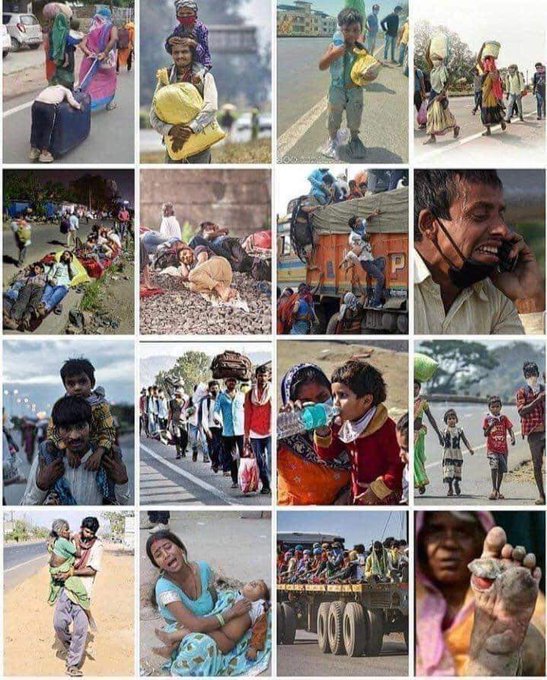
ONE INDIA—we hear about that often during these Covid-19 times. But the disease is proving that we are far from achieving unity. Look at the following reports.

Karnataka Closes Kerala Border, 7 Die Due to Delayed Medical Assistance
Telegana Stops Issuing Passes to Migrant Workers and Others Returning from Maharastra, Gujarat and Andhra Pradesh.
Karnataka Bans Entry of People from Gujarat, Maharastra and Tamil Nadu till May 31
Kerala Stops Malayalees Returning From Other States at Border
1000 Buses from Rajastran Dispatched from Alwar Stopped at UP Bharatpur Border by UP Cops
40 Haryana Buses from Gurgaon with Stranded Migrants Were Sent Back by UP Police

Indian States were stopping their own people from entering the State on the ground that they were coming from Covid-hit red zone, not to speak of people from neighbouring States. The BJP Government in UP not only refused entry for buses from Congress-ruled Rajasthan but also from BJP-ruled Haryana. So, the migrant drama played out in UP was more than a Congress-BJP tussle.

Centre fails to lead
The Central Government did not intervene or coordinate movement of people wanting to return home for nearly two months now. All it did finally was to send some trains here and there without waiting for clearance from the States.  However, this did not address even part of the problem. In fact, the States were acting as if they were different countries and returning workers were refugees coming to their States. This happened because the Centre did not take overall responsibility for Covid-19 control.

The Union Government, however, tried to achieve a form of paramountancy by dictating orders to the State governments on lock down. But, it failed to address critical issues like financing the fight against the disease and addressing inter-State issues such as that of the migrants, and even inter-State movement of patients. Much of the resources for the fight in terms of equipment, personnel et cetera had to be mobilised by the States. The Central agencies other than the ICMR played hardly any part.

Soon, the Centre lost the plot. By the end of the first phase, Prime Minister Narendra Modi, who announced the lock down without consulting anyone, started consulting the Chief Ministers. By the time, he announced the fourth phase; the Centre had to concede more freedoms to the States.  This was despite the fact that the lock down measures hardly attracted any Opposition from the States.  The States were allowed additional borrowing from the market and they went into a ‘self-reliant’ mode as if they had embraced the Atma Nirbhar slogan of the Prime Minister.  The borders were made as impermeable as possible, often citing order of the Union Home Ministry.

The Kerala Example
Kerala had done well in containing the disease, but miscalculated on what the lock down will or will not achieve elsewhere in the country.  Its achievements were largely the result of early detection, isolation, contact tracing and better care. It also looked after the migrant workers. The lock down at the national level made it easy for it to enforce social distancing and adopt precautionary measures including closure of places of worship and other establishments.

In its bid to keep its record intact, it delayed steps to facilitate return of Malayalees outside the State and abroad. This was despite some States like UP bringing back students from Kota in Rajasthan. In fact, Kerala could have asked the Centre to facilitate return of Keralites to the State and migrants to their respective States, after the first phase.

Despite claims to the contrary, it was also not well-prepared for a large influx of Malayalees from outside. This caused crowding and other issues at the border check posts. The migrant workers became restless as their return was being delayed, often because other States were also trying to keep matters pending.  Hence, Kerala too had at least isolated cases of migrants trying to reach their homes on trucks and cycles. Even now, the mess is far from over. The State did not operate a single bus or Sramik train for Keralites from Bangalore, Hyderabad or Chennai till now. Keralites had to arrange their own vehicles for their return to their homes at high costs. Sramik trains from Delhi and other places are yet to reach Kerala.

There is still no national plan as to how to deal with Covid-19 other than extending lock downs. Full mobility may not be restored at least until July. Kerala has a total lock down on Sundays, the scientific reasoning of which is unclear other than delaying the infections by a day or two.  Lower business hours and total closures on Sundays could only increase the crowd. We still have no trajectory either at the national or State levels as to what is to be achieved even by July.

Information Commission orders release of video footage of polling in Kerala

The Election Commission of India and its electoral officers have been forgoing openness and transparency in the electoral process, thus undermining democratic elections in Kerala and probably elsewhere in the country. A recent order of the State Information Commission may help to restore at least some degree of transparency.

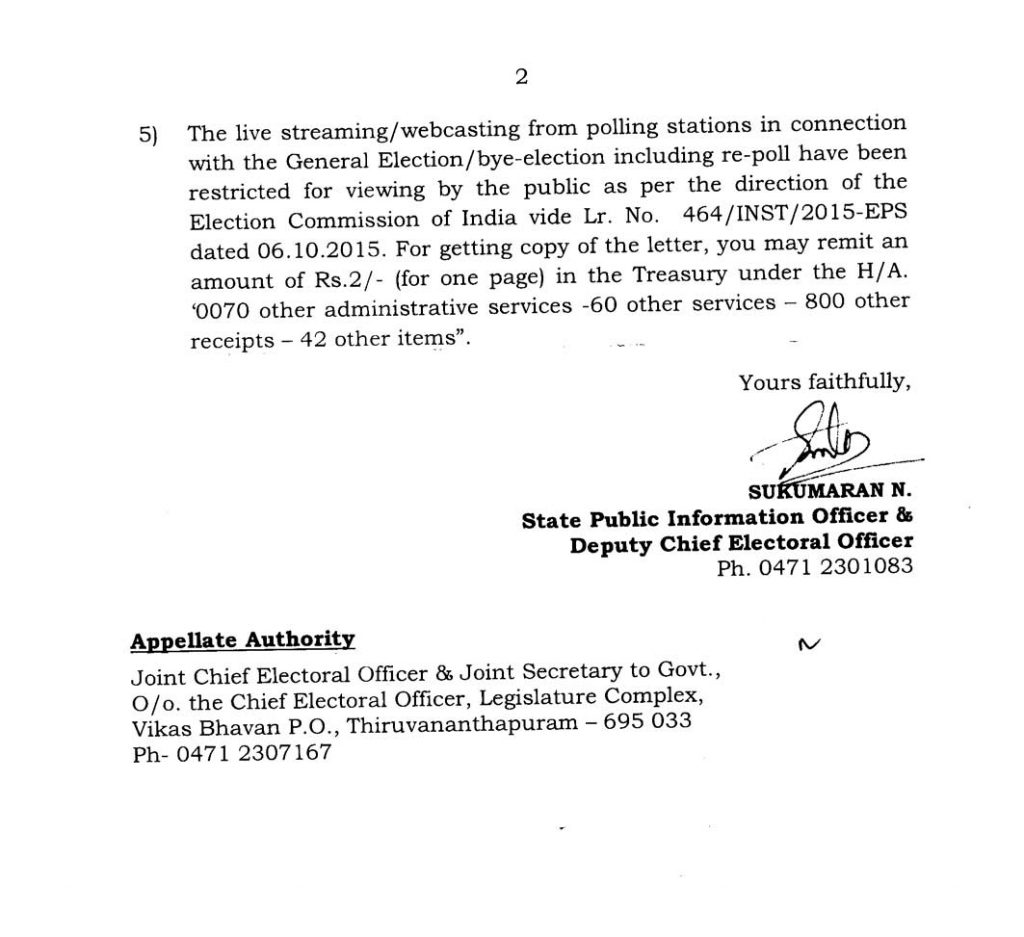
Access to Webcasting to candidates, agents and public during the Lok Sabha polls last year had resulted in detection of several cases of impersonation and bogus voting. However, when repoll were held, the Chief Electoral Officer (CEO) of Kerala restricted viewing of Webcasts to ‘election machinery’ citing a letter from the Election Commission issued in 2015. This impeded concurrent social auditing of the election process.

The letter said that the Commission had decided that henceforth, webcasting in polling stations will be restricted to viewing only by the election machinery in keeping with the spirit of Rule 93(1) of the Conduct of Election Rules, 1961.[ The rule actually deals with production and inspection of election papers. It specifies that used ballot papers, counterfoils et cetera and sealed control units of EVMs should not be opened or allowed to be inspected by any person or authority except under orders of a competent court. This a clause aimed at maintaining the secrecy of balloting. There is no reference to Webcasting or video footage in this clause. How the Commission could take a decision to deny real time access to web footage under this clause and how it could be in the spirit of the Rule is anybody’s guess.

Even if the decision is valid, it did not cover requests for footage under the RTI Act. However, when Advocate D. B. Binu sought the CCTV/Webcasting footage from polling booths that recorded polling percentage of more than 90%, the State Public Information Officer (SPIO) in the Office of the CEO did not release the information. He initially said that a clarification was being sought from the Commission in view of the restriction imposed by the Commission on public access. Later, he claimed that “the final list of polling booths where webcasting was done was being finalised” (sic). He added that no separate details in the manner of polling booths where 90 % and above polling was recorded was kept in that office. The appellate authority dismissed first appeal saying that the Office was awaiting clarification/permission from Election Commission of India on providing such video footage to the public.

This was when there was no provision under RTI Act giving power to the SPIO to get clarification/permission from the Commission. Moreover, the Handbook for Returning Officers had provision that copy of the video footage should be made available on payment of Rs. 50 (fees as per Right to Information Rules, 2012). Hence, the clarification sought was clearly a delaying tactics by SPIO and a clear violation of RTI Act.

The State Information Commission, in a recent order, has now directed the footage to the released. Allowing an appeal from Mr. Binu, Chief Information Commissioner Vinson M. Paul noted that the contention of the Respondent’s office that it was awaiting clarification from the Election Commission of India was not tenable under the RTI Act. Information sought tinder the Act can be denied only under Section 8 or 9 of the Act. Similarly, the argument that the Respondent office did not maintain details of polling booths, which recorded more than 90% polling, was not valid as the CEO’s office is the repository of all such information.

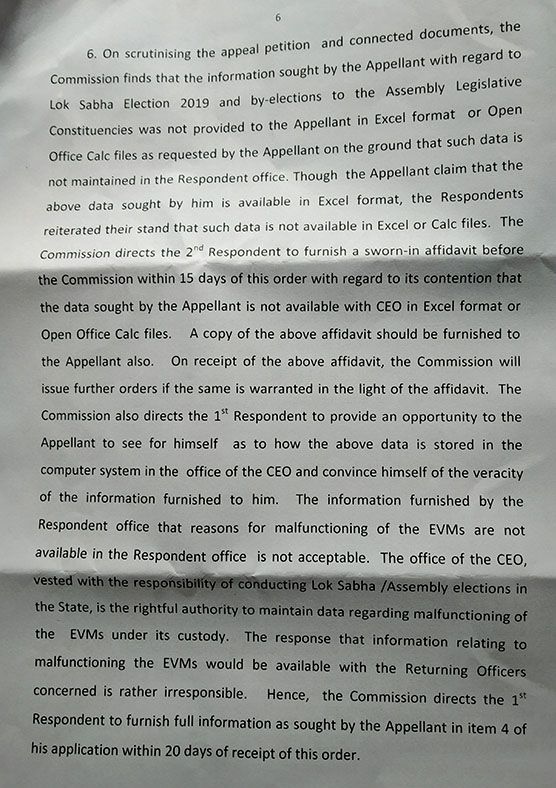
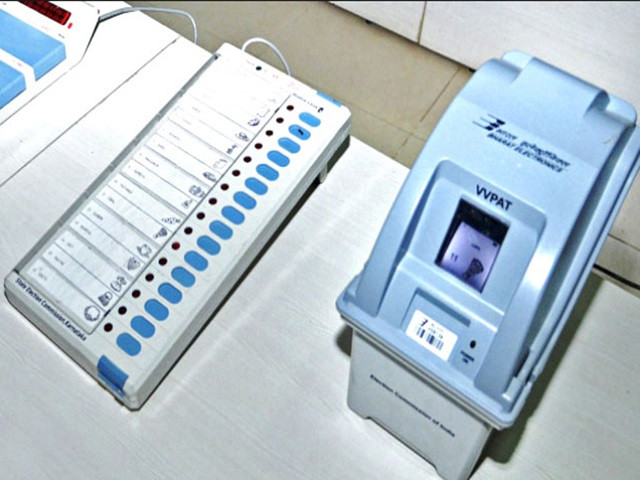
In response to another RTI application from the writer of this blog, the SPIO is maintaining that the reasons for malfunctioning of the electronic voting machines are not available in the CEO’s Office. As many as 434 balloting units, 391 control units and 1041 VVPATs were replaced in Kerala during Lok Sabha polls. The number of BUs and CUs replaced during the by-polls were 15 each. As many as 56 VVPATs were also replaced.

About a month after the by-elections to the Assembly in September/October 2019, the SPIO maintained that the returning officers were yet to finalise data on the polls except in the case of Pala constituency. Though the data were later released on first appeal, it was provided only in PDF format though the request was for data in excel or similar format that could be easily used for calculations.

If what the SPIO said was true, how the returning officers declared the by-poll results and Election Commission notified the winners without finalising the data?

The appeal before the State Information Commission in this case is pending.

Copy of reply from State Public Information Officer, CEO’s Office, on RTI request for election data
Reply from State Public Information Officer, CEO’s Office, on RTI request for election data- Page 2

Performance of Members of Parliament 2014 – 2019

P. K. Biju meeting voters

Did you know that CPI (M) member P. K. Biju (Alathur) was among the top ten performers of the outgoing Lok Sabha in terms of participation in debates, but the topper beats him by a score more than six times higher?

Congress member K. V. Thomas, who did not get a seat this time, and actor Innocent (CPI-M independent), who is contesting again from Chalakudy, were the poorest performers among members who served the full term from Kerala.

Topper Bhairon Prasad Mishra (BJP) from Uttar Pradesh attended all sittings of the House and participated in 2095 debates.  You may even wonder whether the Sabha had so many debates, considering the poor participation by many of our elected representatives. The average participation was about 67 debates nationally and 142.5 for members from Kerala.

Biju participated in 326 debates followed by RSP’s N. K. Premachandran (300) and Independent Joice George (290).  On the other hand, Thomas and Innocent participated only in 42 debates each. P. K. Kunhalikutty (Muslim League) has the lowest score of nine from Kerala. It may be noted here that he was in the House only for about two years, having been elected in a by-election from Malappuram in April 2017. If we extrapolate his performance for five years, it is still the lowest from Kerala.

The outgoing Lok Sabaha has as many as 32 members who did not participate in any of the debates. They included post graduates and doctorate degree holders. They also included former Chief Ministers Shibu Soren (Jharkhand) and Kamal Nath (Madhya Pradesh) besides actor Shatrughan Sinha.

The oldest member in Lok Sabha, L. K. Advani of BJP, participated in only one debate in  a span of five years. So was the youngest member Pravin Kumar Nishad of Samajwadi Party from Uttar Pradesh who incidentally is a professional graduate.

Supriya Sule of Nationalist Congress Party from Maharastra topped in terms of the questions she had asked the government in the House.  She had asked as many as 1181 questions during the five-year term.  Nishikant Dubey of BJP from Jharkhand presented the highest number of private members’ bills in the House— 48 against average of 2.3 bills nationally.

The following MPs had 100 per cent attendance in the House, besides Bhairon Prasad Mishra.

Kulamani Samal Odisha Jagatsinghpur Biju Janata Dal Professional Graduate 100%
Ramesh Chander Kaushik Haryana Sonipat Bharatiya
Janata Party
Professional Graduate 100%
Bhairon Prasad Mishra Uttar Pradesh Banda Bharatiya
Janata Party
Inter/ Higher Secondary 100%
Gopal Chinayya Shetty Maharashtra Mumbai-North Bharatiya Janata Party Under Matric 100%

Attendance is not marked for Ministers. Niranjan Jyoti from Uttar Pradesh had 100 per cent attendance till she became a Minister in August 2014.

Full set of sortable data at
http://www.keralaassembly.org/lok/sabha/2019/performance_2019.php4

Cattle trade ban: another disruptive action by Centre

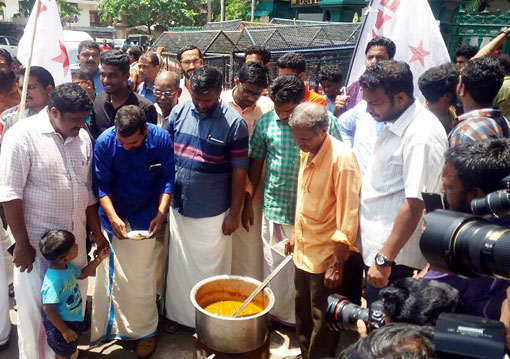
Beef fest organised by DYFI in protest against ban on sale of cattle in markets

Beef fest organised by DYFI in protest against ban on sale of cattle in markets

The order of the Central government banning sale of cattle in public markets for slaughter is another disruptive measure of Modi government after demonetisation. It will strengthen the organised sector to the detriment of the unorganised sector.

Of course, it has political objectives as the decision will please the Sangh Parivar outfits. The decision will be hitting a large number of people, including middlemen, who are engaged in trading of cattle and meat. A large section of them are Muslims. This will provide political capital for the BJP to go for its larger objectives.

The ban has been brought in a devious manner under the Prevention of Cruelty to Animals Act as the Centre did not have powers to regulate trade in meat directly. That power rests with the State governments.  Reasons being offered by various quarters for banning trade in cattle for slaughter through markets such as Supreme Court order, need to prevent cruelty against animals and ensuring of the source of meat (traceability) are bogus or devious.

The Supreme Court order did not say that trade through markets should be banned. It will not ensure benign treatment of animals. Traceability of meat reaching slaughter houses could have been ensured through the market mechanism itself. (Note that the farmers are now required to produce several documents to trade in cattle). Ensuring traceability of both agricultural and meat products is a positive measure towards consumer protection and food safety. However, it is wrong to argue that traceability could be ensured by bypassing the market.

The BJP government do plan to ensure traceability and that is the larger story. As the meat business moves into big hands, their sourcing would become traceable. They will do it for their own interest and enforcement of regulation in this respect is easy.

However, small traders, their workmen and farmers who have to sell cattle for slaughter will be the victims. Like demonetisation, the results are not entirely predictable. Middlemen will find new ways to carry on their trade. A new network may emerge for purchase of cattle for slaughter from homesteads. However, the shift will hit those in the business of meat trade on a small scale and farmers at least in the short term. Farmers will not get remunerative prices until a mechanism that could fetch them competitive prices emerge. Prices of even the draught cattle sold though markets may come down as prices in markets are determined, to a great extent, by the value of meat.

However, meat prices are not going to come down. In fact, it is likely to go up in States such as Kerala, which is dependent on inter-State movement of cattle for slaughter, owing to shortages. These movements could be stalled because of restrictions imposed by the Centre.

The requirement of documentation will dissuade farmers from selling even draught animals through market. Eventually, cattle markets, as we know today, may die out with mechanisation of farm sector, and the trade will pass on to organised sector.

The net effect of all these is that meat production will move into the hands of meat production and marketing companies. The positive and negative effect of this shift is another issue. The point is that the measure will cause disruption affecting thousands of ordinary folk. The Centre had done it without even consulting the State or arriving at a consensus.

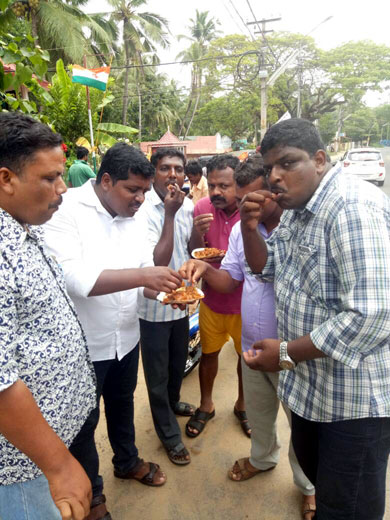
Beef fest organised by Youth Congress in protest against the ban

Beef fest organised by Youth Congress in protest against the ban

Opposition parties in the State are protesting against the measure on the ground that it hurts people’s food choices. This is not very true as sale of meat has not been banned, though Kerala may face some shortages of meat on a short-term.

It is high time that the politicians cared to study the larger objectives and implications of the Central government’s policy before reacting to this. In a country like India, a quick shift of meat from unorganised to organised sector is not desirable. The farmers are already committing suicides owning to wrong policies followed by governments. Similar thing is going to happen to small traders though we can expect that they would be resourceful enough to survive.

As to the farmers who find it difficult to market their cattle for slaughter at remunerative prices, formation of cooperatives on the model of Amul may be an option. Kerala government will be better advised to develop such a cooperative set up instead of going for a legal battle with the Central government. This is not to say that the government should not oppose the Central government’s policy.

Journalistic values: Stinging without ethics

A. K. SaseendranWhen media coverage of ISRO spy case peaked out, a senior journalist faced some critical questions in a television programme about media coverage of the case. The correspondent explained that news reports are called ‘stories’ in English. That translates into ‘Kadha’ (fiction) in Malayalam. What we do are stories, he asserted.

The journalist was later elected as president of the Trivandrum Press Club. That leader of journalists is none other than the present CEO of Mangalam television channel R. Ajithkumar who is now in the middle of controversy over the channel’s ‘sting’ operation.

If you do not have good grasp of journalistic principles, you are bound to flounder in doing a sting operation which is a tight rope walk on journalistic ethics.  Where Mangalam television erred seriously was in misrepresentation of facts. Its story claimed that Transport Minister A. K. Saseendran’s conversation aired by it was with a housewife.

Confident of success of its manipulation, the CEO told another channel later that his reporters were not involved, only to be forced to make a retreat later. He admitted that it was a sting operation by its staff member.

It is also notable that the reporter concerned did not present the story herself as done in legitimate sting operations.  Besides, what she was telling the Minister was edited out.

Apparently, the channel was not keen to probe further to find out whether the Minister would be willing to misuse his office and grant undue favours for sexual favours. Going by the details that have come out, it was just a honey trap, and what we get is a glimpse of a side of the Minister’s character that, at best, raises questions of propriety and morality. Its prime purpose was to tickle and create a sensational debut for the channel.  There was little legitimacy for the story. Professionalism was absent.

The judicial enquiry ordered by the government is a fair attempt at fact finding though one cannot be optimistic about what ultimately would happen to the recommendations of the judicial commission, given the history of such commissions.  (Reports of several commissions are gathering dust at the Government Secretariat.)

Considering importance of freedom of the Press and larger interests of media and society, it is better for the government not to use police to probe the issues until the judicial commission submits its recommendations. However, police investigation into specific and credible complaints from individuals need not wait.

Tailpiece:  The election of Ajithkumar, whose distorted understanding of journalistic ethics was well known to journalists, as president of Press Club, which also runs an Institute of Journalism, points to the fact that the malady is not confined to a single organisation. Till now, there was hardly any peer pressure on journalists in the capital if they breached journalistic ethics. While majority of the journalists in the city are not grossly unethical, many will not mind some favours from those seeking publicity, in disregard to guidelines issued by the Press Council of India.

(Note: An edited version of this opinion piece appeared in Deccan Chronicle on April 9, 2017)

Mullaperiyar: What is Pinarai Vijayan up to?

Pinarayi-Vijayan

Chief Minister Pinarai Vijayan

The new Chief Minister of Kerala Pinarai Vijayan has willingly courted controversy in the first week of assuming office itself over Mullaperiyar and other issues.

The essence of his statement on Mullaperiyar was that Kerala will have to take into account the finding of the empowered committee appointed by the Supreme Court that the dam was safe and future negotiations would have to be over the report of the committee and its reliability. Secondly, he said that a new dam at Mullaperiyar, which Kerala had proposed as a means to ensure safety of people of five districts in the State, was not possible without cooperation from Tamil Nadu.

Faced with strong opposition to the change in the State’s stand over Mullaperiyar, Mr. Vijayan clarified that the government was still for new dam. What he had said was that it was not possible to build a dam without cooperation from the Centre and Tamil Nadu.

There was no compulsion for Mr. Vijayan to come up with an early policy statement on Mullaperiyar as no decision was pending on the issue that needed immediate attention. He also made a statement in favour of revival of the Athirappally hydroelectric project which is strongly opposed by environmental activists and leaders of the CPI which is a constituent of the ruling coalition, the Left Democratic Front. He could have delayed taking a stand on both the issues if he wanted.

However, he apparently had political and administrative reasons for making statements on Mullaperiyar and Athirappally even at the risk of losing some goodwill. On the face of it, the statements hook his bite noire in the party V. S. Achuthanandan who had adopted stands in favour of new dam and against Athirappally project in the past. There has been a truce between Mr. Achuthanandan and Mr. Vijayan before the elections, and Mr. Achuthanandan, as Leader of the Opposition, led the campaign of the Opposition Front. However, the CPI (M) chose Mr. Vijayan as the Chief Minister.

Mr. Vijayan’s statements come at a time when the party is considering an advisory position with Cabinet rank for Mr. Achuthanandan in the Government. Mr. Vijayan’s camp has already raised the criticism that this would give rise to duel power centres. If Mr. Achuthandnan loudly opposed the policy pronouncements by Mr. Vijayan, that would be proof to support the argument. Being a seasoned politician, Mr. Achuthanandan’s reaction was measured. Yet, there is no certainty that he would get the position he desired.

In a raising a controversy, Mr. Vijayan’s political costs are limited. His party does not have much support in any of the areas that will be directly impacted by failure of Mullaperiyar dam. The sufferer is the CPI which has won seats in areas that would be hit by a failure of the Mullaperiyar dam and impacted by the Athirappally project. CPI had done a sterling performance in this election winning 70 per cent of the seats it contested. The CPI (M) knows that it would have to concede more ground to CPI as CPI comes out of political stagnation in Kerala. So, any damage done to CPI is to its advantage.

There is also speculation that the CPI (M) would like to come closer to AIADMK considering CPI (M)’s diminishing importance at the national level. It is also notable that in Devikulam constituency in Kerala, where there is a Tamil population; AIADMK secured over 11600 votes which was more than twice the margin of victory of the CPI (M) candidate in the constituency.

Apart from political objectives, Mr. Vijayan’s statement is clearly aimed at laying the path for new initiatives. Kerala has nearly exhausted its legal options on Mullaperiyar at least for the time being. The way it conducted the cases before the Supreme Court left a lot to be desired. For example, the Supreme Court made an erroneous observation in its 2006 judgement that the waters would be contained in the Idukki dam downstream in case of failure of Mullaperiyar dam. However, Kerala failed to produce the Dam Break Analysis showing that towns and villages and a large population would be washed away, in subsequent litigation in the Court. The previous government then tried to hide reports of the Analysis, which it had commissioned, and other documents relating to the litigation from public by issuing an executive order against releasing documents on Mullaperiyar under Right to Information Act.

Now, Mr. Vijayan needs an opening to drive new policy and this could not be done without admitting the status quo following the Supreme Court orders and the impossibility of building a new dam in the near future. He has to open dialogue with Tamil Nadu. Acknowledging that there is a finding that the dam is safe is first step towards that.
Water for Tamil Nadu and safety for Kerala is slogan raised by the previous government. However, with Tamil Nadu seeking legal options and rejecting the proposal for a new dam, it had only campaign value. Mr. Vijayan has not specified what policy options he would pursue now. He probably has to reconstitute the Mullaperiyar Cell, which failed in its objective, and hold discussions with experts and lawyers before proceeding.

Even before Mr. Vijayan deprecated the proposal for new dam, there was a section of those agitating against the raising of water level in the old dam who argued that the dam should be decommissioned in a phased manner. The decommissioning should be over 50 years or so allowing Tamil Nadu the opportunity to shift its agriculture practices to modern techniques that need less water for irrigation.

Water policy expert Ramaswamy R. Iyer, who was Union Secretary for Water Resources, stated as back as in 2011 that Kerala would be repeating a folly committed more than 100 years ago by building a new dam.

Opinion is growing around the world against large dams and inter-basin diversion of river waters. The Mullaperiyar dam totally cut off flow through the river. International covenants now recognise lower riparian rights and the need to allow flow needed to maintain ecosystems and activities downstream.

Moreover, Kerala’s stand on impact on the Periyar Tiger Reserve is contradictory. On one side, it argued that the raising of the water level would harm the Reserve. On the other side, it proposed a major construction activity and impounding of water within the protected area.

It is expected that Mr. Vijayan would look into all this and come up with a new approach to the issue.

Tragedies and failure to fix responsibility

Police at Puttingal temple near Paravoor following the fireworks accident on April 10, 2016

Police at Puttingal temple near Paravoor following the fireworks accident on April 10, 2016

Kerala Chief Minister Oommen Chandy has announced that rules relating to fireworks in places of worship and elsewhere would be made more stringent while announcing judicial probe into the fireworks tragedy at Paravoor.

The announcement was made without waiting for the finding of the enquiry commission or its recommendations on what are the changes needed in the laws. Instead, the Additional Chief Secretary (Home) was immediately tasked with the job of proposing changes to the rules and stipulations.

This is part of an attempt the divert attention from the fact that it was not lack of laws but failure to enforce them that had caused the tragedy. The tragedy would not have occurred if the ban order issued by the Additional District Magistrate was carried out.

This is not the first time that governments resort to such gimmicks. Whenever enforcement fails, governments talk of inadequacy of laws. Instances are several such as rape laws and the Goonda Act. The so called strengthening of the legislation often results only in increasing the bribes and political patronage that goes behind violation of the laws. Besides, those without influence get punishments disproportionate to their crimes.

The announcement of enquiry commissions is used by politicians as a ruse to escape from public ire. Inquiries of by judicial commission often drag for years at huge public expenditure and its recommendations are not often carried out. The time taken could help matters to cool down and delay or avoid fixing of responsibility. In fact, failure to fix responsibility is a major factor behind repetition of tragedies in Kerala.

The Paravoor tragedy may claim a toll higher than that of Perumon tragedy which had claimed 106 lives. The enquiry commission failed to dig at the real reason for the accident and blamed it on ‘tornado’ without any basis. When 45 tourists died at Thekkady following boat capsize in 2009, the attempt was to blame it on the driver though the boat was defective. Following enquiry by a judicial commission, changes were brought to inland vessel rules. However, even the stipulation that life jackets should be issued and worn by the tourists is still being ignored at several places.  There are many similar cases like the Kumarakom boat tragedy and enquiry commission report on that.

Now, it will not be a surprise if those who failed to enforce the additional district magistrate ban order against the fireworks display at Peravoor are not taken to task. Poor fireworks contractors who are minor spokes in the giant wheel that drives festivals like that at Paravoor will be punished.

Kerala government undermines right to information

top-secretThe Right to Information Act was enacted to bring transparency in administration and thus check corruption.

Kerala government is hitting at the very root of the legislation by exempting a branch of the Vigilance and Anti-corruption Bureau (VACB) from the purview of the Act.

A notification issued by the government a month ago excludes the “top secret section” of the Vigilance from the purview of the Act. All confidential verifications and vigilance enquiries /quick verifications of sensitive nature are done by this section of the VACB.

Those who can hide behind the notification include the Chief Minister, former Chief Ministers, Ministers, former Ministers, members of the Assembly and Parliament and all India service officers. Works related to all surprise checks inclusive that of all India service officers, Chief Minister, former chief ministers, ministers, former ministers, MLAs, MPs are also exempted.  All correspondence made by VACB with Lok Ayukta, Lok Pal, CBI and CVC in connection with any enquiry and investigation as well as all petitions which are already under enquiry/investigation by Lok Ayukta,, Lok Pal, CBI and CVC are covered under the notification.

Interestingly, the notification is issued by a government headed by a Chief Minister who has set up Web cameras in his chamber and office claiming that they would enhance transparency. (That it is a farce is another matter). Moreover, the notification is issued misinterpreting a provision of the RTI Act. Section 24(4) of the Act provides for exclusion of intelligence and security organisations from the purview of the Act. The Government has used this provision to include the ‘T’ branch of the VACB in the schedule of organisations excluded from supplying information under the Act.

But the rider is that the provision applies only to “intelligence and security organisations” notified by the government, and a vigilance bureau is neither. Even if it is accepted for argument’s sake that the VACB is intelligence or security organisation, Section 24(4) specifies that information pertaining to the allegations of corruption and human rights violations shall not be excluded. So, the notification by the government is totally in violation of the Act.

It is just aimed to help corrupt ministers and bureaucrats to buy time from public exposure just before the elections. It is notable that the LDF has not strongly come out against the notification— they are also beneficiaries of the notification.

Related: Mullaperiyar studies are public documents

It was another ordeal for endosulfan victims

endosulfan stir

Endosulfan victims and their mothers on hunger strike before the Secretariat

The hunger strike by endosulfan victims and mothers before Kerala Secretariat ended last week after the Government conceded most of their demands.

However, the demands conceded were the ones that the government had conceded as back as in January 2014 following their dharna before the Chief Minister’s residence. Implementation was lagging and the victims had to launch another stir to get yet another assurance that they would be implemented.

The only concrete gain from the agitation was a specific decision to include about 600 more persons from Kasaragod district under the government’s list for providing compensation. Whether other promises would be kept within the term of the present government is to be seen.

In fact, the approach of successive government to the endosulfan problem had been far from satisfactory. It is more than five years since the National Human Rights Commission recommended compensation and other measures. Still the compensation has not reached all.

Though it was a problem that should have been addressed on a war footing, governments often chose to ignore the problem. It was convenient for them to do so, because the State-owned Plantation Corporation of Kerala was responsible for aerial spraying of endosulfan. None of the officials who were responsible for using such dangerous methods of application of pesticides in a populated area, and that too in excess quantities and over water bodies, were never held accountable.

As to rehabilitative and remediative measures, the government could not even do what the voluntary agencies could. It is notable that even the BUDS schools set up by the government did not have facilities for use by physically challenged persons. Even western closets were absent.

As the water bodies were contaminated, the government took no steps to supply pure drinking water to the affected area for two decades after the problem became known. When Rajiv Gandhi drinking water mission was implemented in kasaragod district, the villages chosen for the project were not the endosulfan affected. Decontamination was never attempted. In fact, the remaining stocks of endosulfan with the Corporation are yet to be removed safety from the area.

This blog has said that the settlement two years ago was aimed at fooling the victims. This time also, the situation is only marginally better.