
Keralam: Yet another White Paper on Finances in the offing

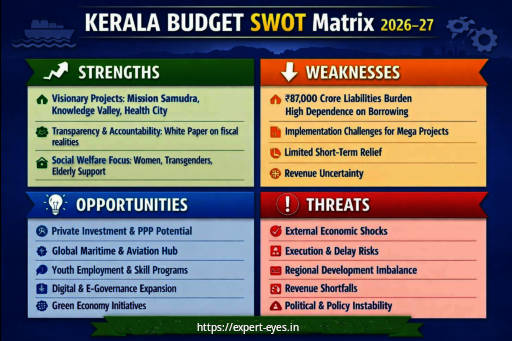
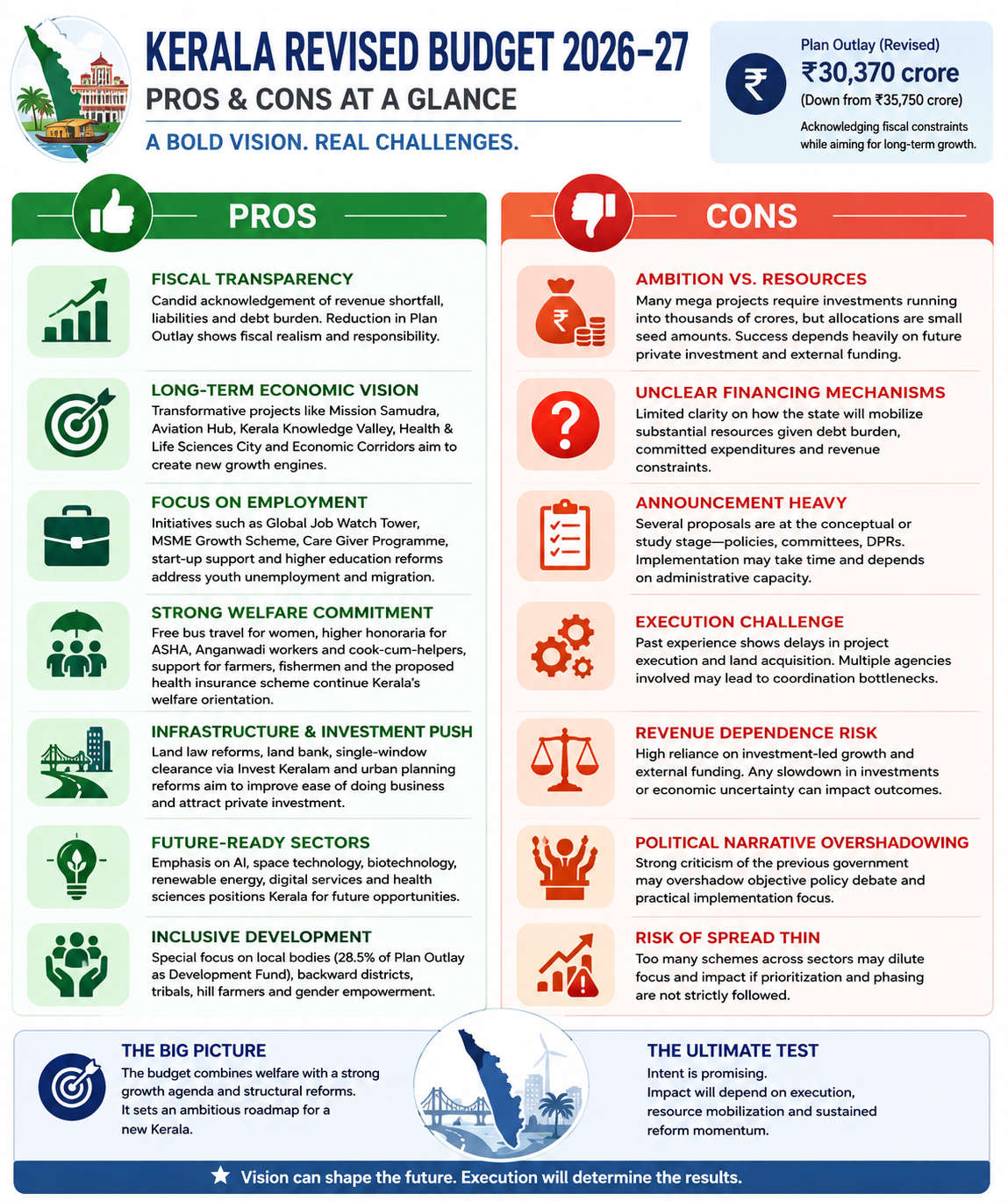
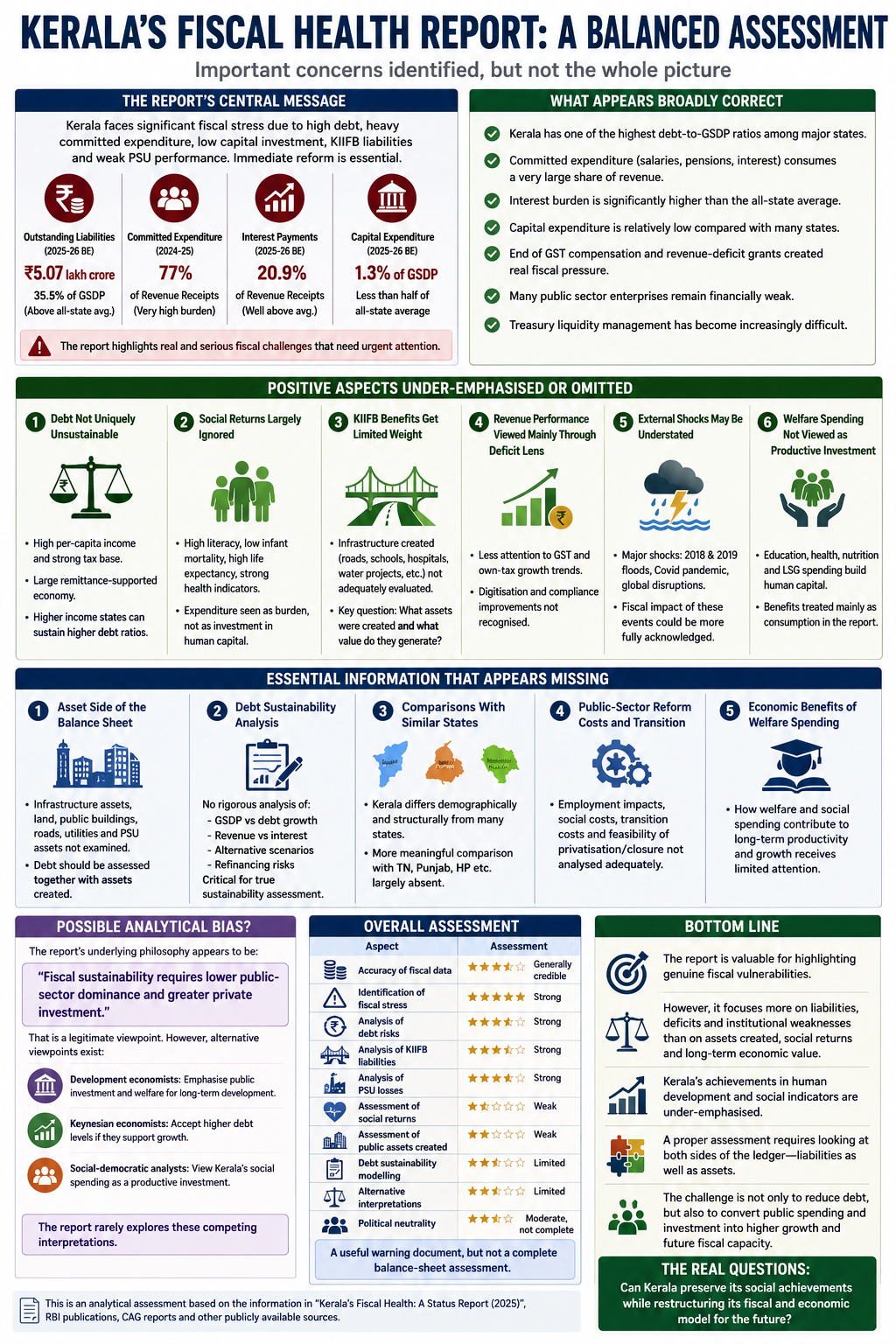
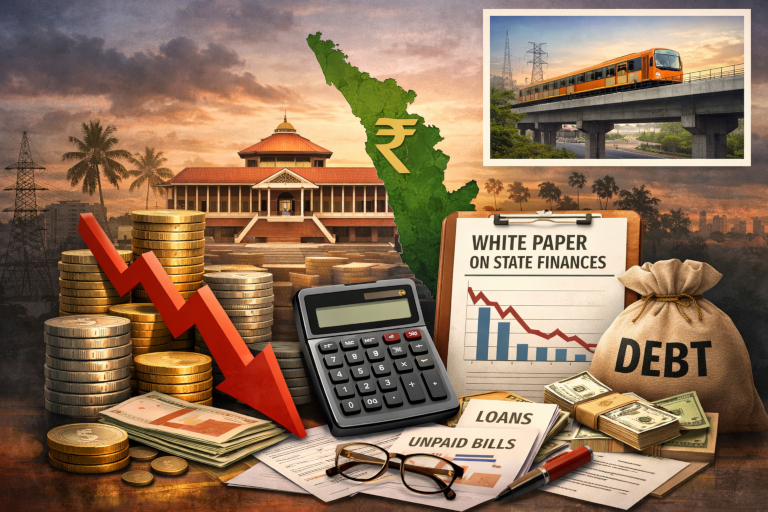
Kerala Cabinet has decided to bring a white paper on the State’s finances. This is expected to present a factual picture of what is widely described as a dire financial situation.

Kerala finances and white paper

Perhaps it was the United Democratic Front (UDF) Government led by A. K. Antony which brought a white paper on State finances for the first time. In one of his early Cabinet briefings in 2001, he lamented that the previous government (Left Democratic Front- LDF) had left the State in a fiscal crisis with no cash balance in the treasury.  Antony was not presenting many details to substantiate his claim which was being contested by the LDF. So, I, who was attending the briefing as a journalist, asked whether his government would bring out a white paper on the State’s finances. He seemed to agree. Some days later a white paper was released. The document listed outstanding payments and liabilities exceeding ₹4,000 crore. This staggering amount included unpaid contractor bills, loans from cooperative banks, and delayed salaries and pensions.

The Antony Government as well as the LDF Government that followed in 2006 did take some measures to improve the financial position of the State. But the results were modest. The UDF again came to power in 2011 and brought a white paper the same year. One of the points listed as gains of the 2001-2006 UDF Government was revenues from Sales Tax/VAT and Motor Vehicle Tax going up by a few percentage points in overall composition of State’s own tax receipts.  The uncovered Budget commitments at the end of LDF rule exceeded ₹ 5000 crore. A major chunk of the revenues as before was going to pay salaries, pensions and interest.

The LDF’s fiscal policy often leaned toward expansive spending, with leaders such as former Finance Minister Thomas Isaac arguing that higher expenditure would spur development. The result of such policies was that State’s debts doubled every five years irrespective of whether the UDF or LDF was in power. After coming to office in 2016, the LDF introduced new mechanisms to mobilize debt outside the Reserve Bank of India’s purview, notably through the Kerala Infrastructure Investment Fund Board (KIIFB). In recent years, the LDF faced criticism for wasteful expenditure—charges the current government now appears keen to highlight. In fact, the LDF too had brought out a white paper back in 2016 with Dr. Isaac as Finance Minister.

The third in the series of white papers by the UDF, that is being proposed now, differs from earlier ones in that the Chief Minister V. D. Satheesan proposes to enlist the services of financial experts from outside the Government too in preparing it. Apparently, the new Chief Minister wants them to suggest corrective measures. Whether he can rein in mounting debts and deficits remains uncertain, but the forthcoming document may offer better insight into options before him.

Governor redeems

Finance Minsiter K. M. Mani

Kerala Finance Minister K. M. Mani presenting the Budget for 2015-16 in the Assembly on March 13, 2015 amidst vandalism by Opposition

Kerala Governor P. Sadasivam has at least nominally redeemed the prestige of Kerala legislature by warning legislators about their conduct.

A former Chief Justice of Supreme Court of India, Sadasivam will not have failed to notice the obvious break down of not only Constitutional norms but also gross violation of democratic principles by the Opposition. There is no place for vandalism in legislative bodies in a democracy. However, reaction from opinion leaders was generally muted while the ordinary people on the social media could do nothing more than lampooning the politicians.

The Governor’s remark that the happenings on the floor of the Assembly on Friday (March 13, 2015) may even justify submission of a report by the Governor to the President under Article 356 of the Constitution of India is a rebuke to both the ruling and Opposition fronts. What the Governor hints is the vandalism of the kind in the House amounts to Constitutional break down warranting dissolution of the Assembly.

The Speaker N. Sakthan could not maintain even a semblance of order in the Assembly because of his reluctance of use force. Normal practice in the House is to use the watch and ward to cordon the podium of the Speaker as soon as the Opposition starts disruption of proceedings. On Friday, the Opposition had started their protest even before the House was called into session. Speaker probably hesitated because he was new to the Chair and did not want to start with a direct confrontation with the Opposition and become a direct target of the Opposition in the coming days.

The Opposition leaders had gone to the Governor saying that the presentation of the Budget was not in order, after creating all the disorder. The Governor has indirectly rebuffed them by accepting the Speaker’s stand that the Budget was duly presented. The Speaker could not be seen as conducting the business of the House during the bedlam created by the Opposition who had also practically gheraoed the Speaker and thrown his chair off the podium in gross disregard to the prestige of the House and its privileges. (The procedures adopted in the House for presentation of the Budget could be irregular but could not be challenged in a court of law. The House is the final arbiter of its own procedures).

The Governor, who himself is part of the Assembly as head of the State, has hinted that the further proceedings on the Budget including passing of the demands for grants on account and Appropriation Bill should be done in an orderly fashion. He may not condone total absence of order and decorum.


Discriminating in favour of women

Finance Minister P. Chidambara with Budget papersFinance Minister P. Chidambaram rides the wave announcing special programmes for women. However, the announcement of a public sector bank exclusively for women is an admission that existing public sector banks does not treat women equally.

That women are discriminated against by banks and that they are not getting adequate banking services is a shame. This is when one of the premier banks like the ICICI Bank is headed by a woman. The government has been able to cater to senior citizens to some extent through regulation. (They still face problems in using schemes such as reverse mortgage.) The government is apparently not able to do this for women— that is to force all banks to treat women equally.

A separate bank for women would solve the problem only notionally. If the same logic is applied to other areas, we would soon need an exclusive bank for SC and ST, minorities and backward classes.

Another scheme is ‘Nirbhaya’ for empowerment of women. The contours of this scheme are yet to be defined. We had scores of programmes in the past for empowerment of women. Like many other government scheme, they did not achieve much. What ‘Nirbhaya’ would do is to be seen.

Following the Delhi incidents, we are in the era of positive discrimination. Women returning from abroad are allowed to bring gold worth Rs. 1 lakh while men can bring only half the quantity. (For women, financially capable of travelling abroad, this is a pittance.). Well, this proposal violates equality before law and hence would be ultra vires of the Constitution.

 Budget highlights


Contributory pension scheme and its flawed logic

The contributory National Pension Scheme for government servants brings uncertainty about future pension benefits of government employees and makes government jobs less attractive.

Employees of Kerala Government began an indefinite strike today to protest against the pension scheme, though it will not affect serving employees who would continue to be eligible for statutory pensions. It will be the new recruits who would be hit by the pension scheme.

The government argues that more than 80 per cent of its revenues were now being spent on salaries and pensions. Though the pension scheme will only cause an immediate increase in government spending with a ten per cent contribution to be made to the pension fund, it will free the government from paying pensions to the new recruits two to three decades from now.

The government says that there was four-fold increase in pension liabilities over the last decade. However, this is in proportion to decadal increase in revenues and borrowings of the government. This is not to say that the level of expenditure on salaries and pensions are justified. It rather points to continuing inefficiencies of administration in checking expenditure and tax collection, despite availability of new tools such as computers. Large scale leakage of revenues remains unplugged. The employees too had not been helpful in this regard. Over-staff and idling are not rare in government service.

The government as well as employees contributions into the pension fund are to be deposited in government securities, public sector bonds and in mutual funds. When the deposits are made in government securities, the government itself would be paying interest on its own contribution and employees’ contribution. This is not going to improve government finances. Like salaries and pensions, interest payments are also a heavy burden on the State government.

Mutual funds offer no guarantee of reasonable returns. Some of the pension funds run by them have not performed well, giving some indication of what would happen to the money of employees. The employees would have to bear the cost of the authority formed to run the pension fund. When authority makes investments in mutual funds, the employees would also have to bear the fund management charges imposed by the mutual funds. Some of the government-run welfare funds give an impression what these costs would be— the welfare fund boards eat away much of the contribution by the workers. It would not be surprising if the government would have to give grants to the authority in future to ensure a reasonable pension to the employees a few decades from now. In any case, the pensions then would neither be assured or growing (with every pay revision) as is the case now.

The net result could be that the government jobs would not attract talents. And the performance of government could fall further. It is also doubtful whether the pension scheme would help the government to overcome in financial problems. The real beneficiaries would be those who get to handle the funds.

Proposal for five-day work week in Kerala

The proposal for five-day work week for government employees in Kerala is borne out of financial exigencies rather than any well-thought-out plan to improve administration.  As it stands now, the reduction of a work day result in poorer services for the public though there may be gain in terms of governmental expenditure in running the services. So, it would be lesser service to the public at lesser cost.

However, the situation could be qualitatively different if the government contemplates five-day week after efficiently implementing e-governance. Many of the government services could be offered to the citizen at lesser cost on a 24×7 basis if the e-governance system is expanded to cover more and more areas. Then curtailment of a work-day may not affect the public much.

As to the financial problems of the government, it is the governments own creation. It had created more than 15000 new posts in one year, adding to the burden of the exchequer.  Considerable sums are being spent for welfare though there is no assurance that it reaches the right hands. Government land is being granted for a pittance to the farmers and the landless and also to influential organisations. Many of these gifts are not justified.  This is when it has established schemes and ways for routing welfare assistance. The Government  indeed cared for the poor and disabled by raising the welfare and old age pensions which was a welcome measure. However, a casualty of the financial strain faced by the government was the noon meal scheme in schools.

Secretariat decked up for Onam holidays

Secretariat decked up for Onam holidays (file photo)

It is high time that the government focused on augmenting revenues from the flouring trade in gold, textiles and hospitality. Special concessions to the IT sector are no more needed. Government could either reduce expenditure or improve efficiencies by routing its subsidies in cash through the banks. It is also worth thinking whether government should maintain cars and drivers for its office or provide them with a car allowance. This, in fact, was one of the recommendations of a expenditure commission appointed by the government. Several such recommendations for austerity have been gathering dust.