
He was one of the pioneers. He travelled the breadth and depth of forests in Kerala and campaigned for their protection, especially the shola grasslands that form the habitat of kurinji plant, Strobilanthus kunthiana.
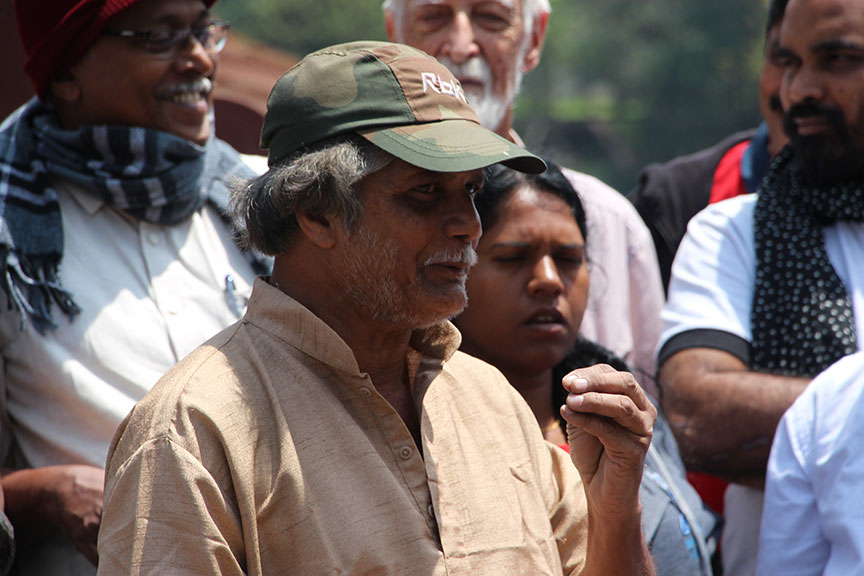
He was all in all of the Save Kurinji Campaign, but would seldom see him in the front line of the campaign march. He organised almost everything regarding the campaigns, but disliked to assume an official designation in the Save Kurinji Campaign Council. When unavoidable, he assumed the title of Coordinator. That was G. Rajkumar, who passed away this morning, the 14th of January 2026.
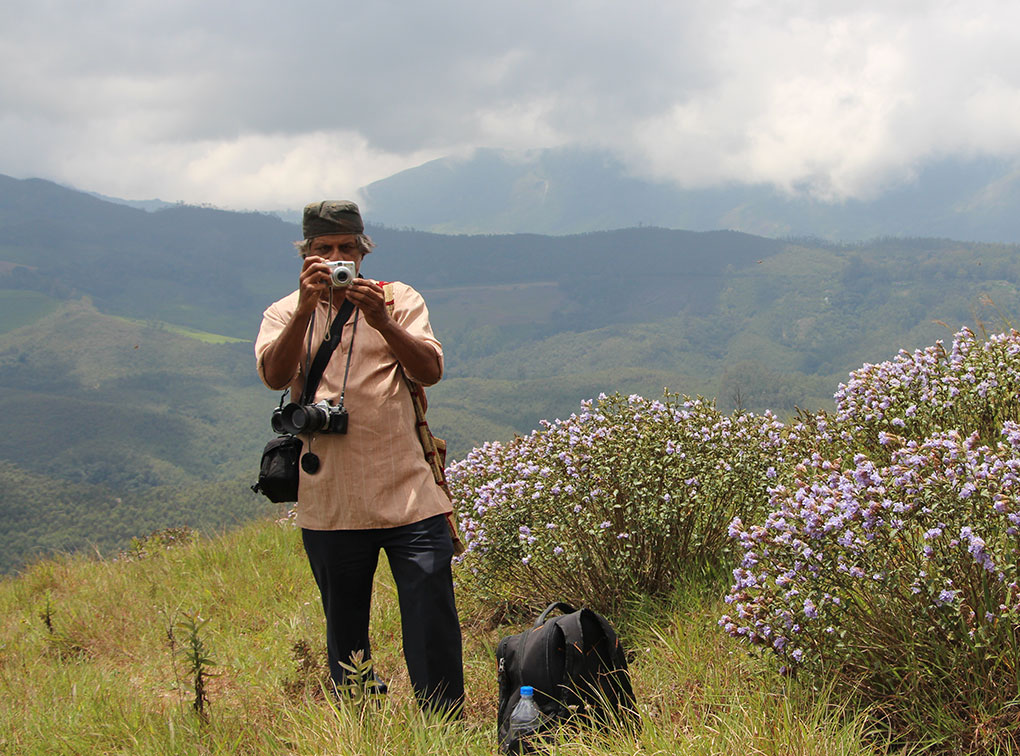
The campaign for protection of kurinji and its habitat was one the major environmental campaigns that Kerala saw after the campaign for protection of Silent Valley.
The success of the Silent Valley campaign towards the end of the seventies and early eighties was inspiration for several campaigns such as those for conservation of marine fish resources, protection of water bodies and ending of selection felling in forests and encroachment of forests lands. The Save Kurinji Campaign perhaps came a little late because not much was known at that time about shola grasslands.
The Campaign was started by a group of youngsters in the eighties against background of destruction of the shola grasslands of Munnar and Palani Hills and its flagship species neelakurinji (originally named as Strobilanthus kunthianus) by planters. Many of them were already into environmental campaigns under banner of Asambu Greens and other organisations.
The first of its campaign march from Kodaikanal to Munnar (mostly by foot) in 1989 was inaugurated by none other than Zafar Rashid Futehally (1920 – 2013), Indian naturalist and conservationist best known for his work as the secretary of the Bombay Natural History Society. The organisation of the march was rather spontaneous, and the Save Kurinji Campaign Council came into being later in the year.
The campaigners, led by G. Rajkumar, marched from Kodaikanal to highlight the loss of sholas to plantations of eucalyptus, wattle and pine. Besides activists from Kerala and Mahe, participants included C. J. John and some members of the Palani Hills Conservation Council, Anand Felix Skaria of Sahyadri Ecology Education and Documentation, activist Israel Bhooshi and even a few English women.
The trekkers walked from Kodaikanal to Poompara, and after reaching Poondi by road, they set out across the kurinji lands that were being converted to plantations. They reached Koviloor via Klavara. Many also walked from Koviloor to Munnar Top Station.
A similar march was taken out the next year. That year (1990) kurinji flowered en masse in some hills near Munnar, close to the tea plantations.
In 1991, the Council in collaboration with Wayanad Nature Protection Council organised a seminar and exhibition at the Bank Employees Union Hall in Thiruvananthapuram against destruction of shola grasslands. This was attended by environmental activists and leaders from different parts of Kerala.
Another seminar, exhibition and slideshow focussing on protection of kurinji plants was organised in 1995. This was attended by poet Dr. K. Ayyappa Panicker, K. V. Surendranath (former Member of Kerala Legislative Assembly), Prof. V. K. Damodaran (former Director, Department of Science and Technology and Environment, Kerala) and Dr. Gloria Sunderamathi (former Professor at the Department of Tamil, University of Kerala). Campaign marches and other programmes were organised in the subsequent decades also. Marches from Kodaikanal to Munnar took place in 1994 and 2006 under joint auspices of the Save Kurinji Campaign Council, the Malabar Natural History Society, Kozhikode, and Munnar Environment and Wildlife Society. Youth from the Malappuram Chapter of Youth Hostels Association used to undertake almost annual pilgrimages to the shola grasslands from 1994 to 2006.
These led to increased awareness about the importance of sholas and their flora and fauna. Initially, there were only a few studies about sholas. But soon there were several, including a book on shola forest published by the Kerala Forest Research Institute and papers by E. Kunhikrishnan of Department of Zoology, University College, Thiruvananthapuram. There were also writings and studies on the ill-effects of eucalyptus, an exotic species, on local hydrology and environment. The studies and campaigns led to stoppage of eucalyptus and wattle plantations in Kerala and Tamil Nadu though those planted already continued to affect the ecosystem.
In 2006, the Campaign met with its major success with the LDF government declaring 3200 hectares of kurinji habitat near Munnar as Kurinjimala Sanctuary for protection of kurinji and its habitat. The political decision to form the sanctuary came after a group of environmental activists led by poet Sugathakumari met then CPI State Secretary Veliyam Bhargavan and impressed him on the need for formation of a sanctuary to protect the kurinji land. Both the Revenue and Forest departments were under control of CPI Ministers and Mr. Bhargavan played a major role in bringing about a political consensus.
The then Forest Minister Binoy Viswam took special interest in conserving shola grasslands and in expanding the protected areas through formation of the new sanctuary. Before that, the UDF government led by Oommen Chandy had cleared the Kadavari Kambakallu areas of ganja cultivators and set up a forest station at Kadavari. The Palani (Kodaikanal ) Wildlife Sanctuary was formed in 2013 by Tamil Nadu government.
The Eravikulam National Park in Kerala was already a protected area for conservation of shola grasslands. The Year 2006 was one of mass flowering of kurinji in several areas including the Park. The Munnar Wildlife Division of Forest Department paid special attention to keeping the Park free of fires in summer under leadership of Wildlife Warden Roy Thomas. Protective measures were also extended to the newly formed Kurinjimala sanctuary. This helped in maturing of the seeds of kurinji and its propagation. The demarcation of the boundaries, which had dragged on, was completed a few years ago.
(Part of this article has been published earlier in Aranyam magazine published by the Forest Department of Kerala, India. To read more about kurinji, visit https://kurinji.in)