
UDF government courts controversies

The open sparring in the UDF over the lease of estates in Nelliampathy and the controversy over regularisation of conversion paddy fields have dented the image of ruling United Democratic Front (UDF) in Kerala.

The Government Chief Whip P. C. George took cudgels against Forest Minister K. B. Ganesh Kumar for initiating steps for takeover of estates over expiry of lease or violation of lease conditions including sale or conversion of the estates. Mr. George’s contention is that the Forest Department is acting against farmers, meaning the estate owners.
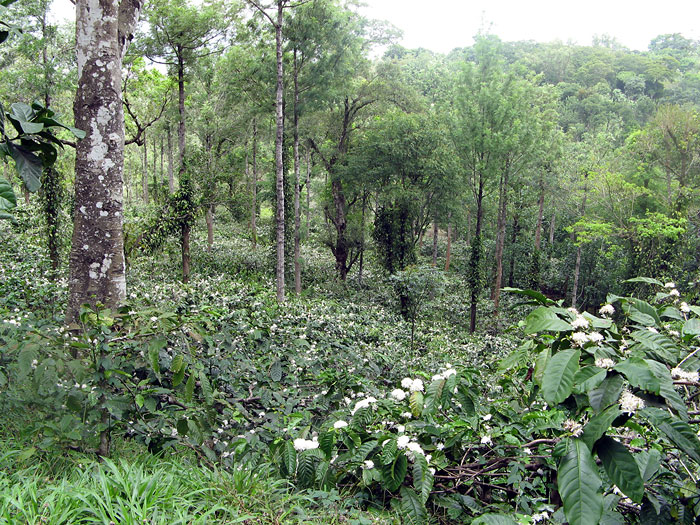
Nelliampathy Estates

Nelliampathy Estates

Estate owners have been trying every trick in the book to prevent reversion of their estates. They have also gained support of a section of the UDF in favour of their efforts to retain the leases.  However, a section within the UDF is opposed to it. In fact, there was a section favouring the estate owners in the previous LDF government also. However, the CPI which was in charge of the Forest portfolio had favoured take over.  After the UDF government came to power, interested groups were working for change of policy and that yielded some results.

The fight in the UDF over the issue would not die down easily as much is at stake.

Similar is the situation on the question of reclamation and conversion of wet lands and paddy fields. Those attempting large scale conversions had received the support of a section of the previous government. Now, they were getting almost full support from the Cabinet with it approving a proposal to regularize pre-2005 conversions. This would have helped realtors and investors in resorts and other projects. However, opposition is growing in the UDF with V. M. Sudheeran and others openly speaking against the decision. What they are pointing at is obvious.

These controversies are accentuating dormant internal schisms in the front and could even threaten the cohesion of the government.


Mullaperiyar: Directive against disclosure of dam break analysis

Additional Chief Secretary (Water Resources) of Kerala K. Jayakumar (now the Chief Secretary) has directed that the Dam Break Analysis (Mullaperiyar dam to Idukki Reservoir) should be denied to applicants seeking copies of it under the Right to Information Act.

The Additional Chief Secretary cites Clause 8 (b) of the Act for denying the public copies of the dam break analysis. However, there is no such Clause in the Act. There is, however, a clause 1(b) under Section 8 which states that information which has been expressly forbidden to be published by any court of law or tribunal or the disclosure of which may constitute contempt of court could be denied to applicants. But, the Office of the Chief Engineer (Inter-State Waters) has failed to provide copies of any court order forbidding publication of the Analysis.

Order against disclosure of Mullaperiyar dam break analysis

Order against disclosure of Mullaperiyar dam break analysis

Moreover, the analysis in question has been placed before the Assembly, and so, it has become a public document in every sense of the term. Moreover, Water Resources Minister P. J. Joseph himself had held a press conference disclosing findings in the Analysis at Thodupuzha.

It is also notable that it is the practice world over to publicise results of dam break analysis and inundation studies so that the people are aware of the risks and safe areas. In some countries, it is mandatory to do such analysis and prepare evacuation plans at the time of construction of dams itself. These plans are always brought to the notice of the people and local authorities.

This blog has published map showing  area of submergence from the report of the Mullapeiryar Dam Break Analysis. Mullaperiyar Dam Break Analysis

The full report of the dam break analysis is at Expert-Eyes.Org
You may also want to  read: Mullaperiyar: behind the veil

Kerala: return of the jungle

Nature is reestablishing in several parts of Kerala State. Otters have made a comeback to the mangroves in the Asramam area of Ashtamudi Lake in Kollam district. Nilgiri tahr and tigers are sighted in forest areas where they had not been seen for long. Sholas are re-establishing in upper Palani plateau of the Western Ghats not far from Munnar. Several plants in lower elevations too are on a comeback trail. Tribals of Wayanad have harvested more honey this year suggesting that the statuses of the systems that support bees are apparently improving.

Nilgiri tahr

Nilgiri tahr (ibex) and kids photographed at Eravikulam National Park, Munnar, Kerala. Photo by Roy Mathew

The Nilgiri tahrs, protected in Eravikulam National Park, have re-established themselves on hilltops near Lockhart Gap and Adimali outside the sanctuary area in recent years. There are increasing numbers of tahrs in the Mukkurthi National Park in Tamil Nadu.  Near viable populations have been reported from a location near Ponmudi in Thiruvanathapuram district at an elevation of about 900 metres.

(Tahrs have also been reported from Parambikulam Wildlife Sanctuary and Silent Valley National Park and more than a dozen other   locations in Kerala.  Many locations in the Nilgiris, Pulneys and Anamalais of Tamil Nadu also have populations of Nilgiri tahr. Srivilliputhur Grizzled Squirrel Wildlife Sanctuary, Indira Gandhi Wildlife Sanctuary and Kalakkad Mundanthurai Tiger Reserve in Tamil Nadu are among the habitats of the tahr. They inhabit mountain slopes at altitudes ranging from 600 metres to 2600 metres.)

All these point to the fact that many species and ecosystems are resilient enough to make a comeback if adequate protection is accorded. However, the gains achieved in recent years could get reversed on account of climate change or laxity in protection.

For more information on Tahr population, see
http://www.nilgiritahrinfo.info/presentpopu.htm

Regenerated Attappady: boon to Tamil Nadu

After initial hiccups and extension of project implementation periods, the Attapady Wasteland Comprehensive Environmental Conservation Project has achieved many of its objectives. Trees are now growing on the hills, rendered barren in the past, and rivers are flowing even in summer.

Much of the Attappady hills, once covered with evergreen forests, had become wastelands owing to encroachments, unwise agricultural practices and consequent soil erosion, cattle grazing and felling of trees. The project was started in 1995 with funding from the Japan Bank for International Corporation (now JICA) received in 1996, but field work took off only in 2000. The project was targeted to be completed in 2005. However, the situation was not rosy as an extension of project was considered. There has been misuse of funds and corruption and targets were far from achieved.

However, project implementation improved from 2005 and a peak performance in expenditure was achieved by 2010. Then continuation of the project became an issue and further extensions were granted. Another extension with new projects under the implementing agency Attappady Hill Area Development Society is under consideration.  It is pointed out that about 5000 hectares more remained to be developed and the trees planted need to be protected from fire and plunder.Attapady hill planted with trees

Attapady hill planted with trees. The area was barren before planting

A decade is hardly the time for forests to grow back. Patches of barren fields could still be seen amidst the planted trees. (Planting was done in government owned forest land as well as in private lands as conservation measure). Resumption of grazing and felling of trees for fire wood can reverse the trend. However, protection will ensure further regeneration without fresh planting and other project operations.

The fact that restoration is far from complete can be gauged by looking at both banks of Bhavani River. The River, which originates in Silent Valley National Park of Kerala, flows through Attapady for about 25 km and then through the Kerala-Tamil Nadu border for about seven km. If you look across the River into Tamil Nadu side (see photo below), you can see the riparian forest trees growing there whereas the bank on the Kerala side is almost barren. Compare this with the restored hill on the Kerala side close to the River in the photo above.Kerala TN border marked by Bhavani River

Bhavani River Seperating Kerala and Tamil Nadu territory

The re-forestation of Attapady hills would reduce threat of degradation to the buffer areas of the Silent Valley National Park. It would also benefit Tamil Nadu as it increases the flow through the Bhavani River which courses through Coimbatore and Erode districts of Tamil Nadu after leaving Kerala. It is a boon to Tamil Nadu as was the declaration of the Kurinjimala Wildlife Sanctuary in Idukki district. (Covering about the same area of Periyar lease (for Mullaperiyar dam), the shola grasslands of the Sanctuary is capable of retaining about the same quantity of water as could be stored in the Mullaperiyar reservoir and release them gradually throughout the year. Thus Kerala gifted a second Mullaperiyar to TN by conserving water.)