
Poison in food

If we look at officials records, the banning of Maggi noodles will look as an isolated incident. Maggi was the first instant noodles to be introduced in India in 1982 and the pre-1982 generation had not tasted anything like that before. However, the food item had hardly been examined critically though sometimes perceived as unhealthy having several additives and preservatives in it.

When the dust settles down, Maggi will bounce back. Many Indians would not have even heard of the controversy and they will continue to relish the foreign food. The Maggi incident will not be a lesson for either the authorities or the people. In fact, there are thousands of products in the market which can be worse than Maggi.

The Food Safety and Standards Act was enacted in 2006 with more stringent provisions than the erstwhile Food Adulteration Act. However, during the past nine years, the authorities have not cared to strictly enforce the Act, but for occasional tests and warnings.

The problem is not confirmed to large packaged food manufacturers. Many food items such as vegetables and grains in the market are contaminated or adulterated. Items procured by large manufacturers cannot be free of contaminants and it is not easy to test all the items that go into production. Many smaller operators cannot even afford to do any testing at all.

It has been found that excessive quantities of pesticides are being used in vegetables cultivated in Tamil Nadu and grains in Punjab. Sometime back, all samples of packaged chilly power sold in Kerala were found to

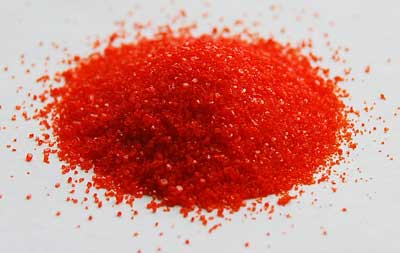
Potassium dichromate used as an adulterant in chilly powder affects resperatory system, liver, kidneys,eyes, skin and blood.

Potassium dichromate used as an adulterant in chilly powder affects resperatory system, liver, kidneys,eyes, skin and blood.

have highly toxic and carcinogenic potassium dichromate in it. Even products of well known brands had it. It turned out that they were procuring chilly powder from North India and was merely packaging and marketing it in Kerala without any testing. (It was more profitable for them to buy the powder than buy the raw material for powdering in Kerala.)

Nothing was heard of prosecution in these cases. And it is not known whether chilly power sold in Kerala still has potassium dichromate. Pesticide residues and contaminants sometimes become undetectable after processing. All these point to the need for stricter food safety enforcement covering the source to final product.


Befooling endosulfan victims:

endosulfan

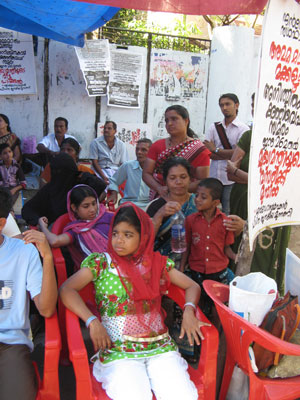
Endosulfan victims staging a sit-in in front of the official residence of Chief Minister Ommen Chandy in Trivandrum in January 2014

It is more than three years now after the National Human Rights Commission gave its recommendations on compensating the victims of pesticide endosulfan in Kasaragod district in Kerala.

The State government led by Oommen Chandy rules with the motto of acting fast to achieve more in less time. However, even three years after the Commission gave its directive; the State is yet compensate all the victims and carry out the four recommendations given by it. The Central government is also to carry out another set of recommendations such as nation-wide survey of populations that have been affected by the use of endosulfan and supplementary efforts to support relief and remediation efforts of State government including establishment of a Palliative Care Centre.

endosulfan

Another view of endosulfan victims staging a sit-in in front of the official residence of Kerala Chief Minister Ommen Chandy in Trivandrum in January 2014.

The delay in implementing the recommendations by the State government belies its claim that it is a fast-acting government. In fact, several of the packages announced by the State and Central governments are in limbo including that for the endsosulfan victims. (The first of these was for the evictees of Moolampally for Vallarpadam project.).  It even appointed a committee, headed by retired judge C. N. Ramachandran Nair, to befool the victims and delay implementation of the recommendations.

This has forced the endosulfan victims to stage a protest sit-in in front of the Chief Minister’s residence. The agitation has since been settled though decision is pending on demands like rejection of the Ramachandran Nair committee report. However, doubts linger whether the government would only make a half-hearted attempt to carry out its promises just to tide over the forthcoming Lok Sabha elections, whereas concerned, planned action is called for in Kasaragod.


Mainstreaming tribals

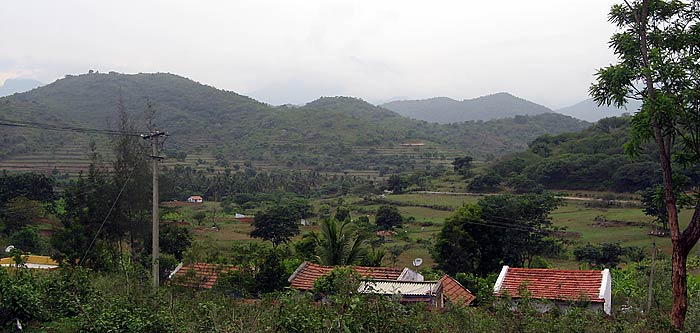
Attappady-- a view  Photo: Roy MathewChief Minister Oommen Chandy proposes to bring Attappady tribals to main stream as the government has failed to address their problems after six decades of ‘tribal development’.

Well, his plans are for the next generation. Children from the tribal hamlets are to be educated in special model residential schools and all eligible students given admissions to the Plus One and undergraduate courses.

This is a course of action that had been tried in countries such as USA, Canada and Australia which have invited protests. However, such protests over uprooting the tribals from their culture are muted in Kerala. Many anthropologists hold opinion against weaning tribal children away from their culture and mainstreaming them. But the questions whether they should be allowed to live primitive lives or proselytised to adopt modern lifestyle is an enduring question.

As to the immediate problem of malnutrition among tribals, the government has come up with an answer—community kitchens. Mr. Chandy’s view is that the tribals do not eat well. Many are so lazy that they are willing to cook. It is not clear whether the tribals would come regularly to the community kitchens to eat. Even if they do, that could make them lazier as far as cooking goes. Better, if community kitchens teach them how to cook and encourage them to do their own cooking.

Tribal Women at Agali, Attappady

Tribal Women at Agali, Attappady

But the real problem in Attappady is not that the tribals have not learned to cook or made eating cooked food a habit.  The real issue is alienation of their land, destruction of forests and restrictions on their access to forest resources including food materials. However, the Chief Minister refuse to acknowledge this and take strong measures to resume their lands despite court verdicts. Even problems like drunkardness stemmed from land issues. Alcoholism spread as a result of exploitative tactics of the settlers in Attappady.

Studies have reported that the deaths of infants in Attappady were not the result of alcoholism among their mothers. It happened because of malnutrition. The government wants now wants all tribal women to give birth at hospital to ensure the nutritional status of mothers and children. For this, vehicles are to be provided. On one hand, this is better said than done. Many tribals had failed to get timely medical attention not because of lack of schemes or vehicles but because the officials concerned did not care. On the other side, it is notable that Kerala is emphasising on hospital based deliveries when the West that promoted it is now going back to midwives and deliveries at home.

Surveillance cameras infringe privacy of citizens

Kerala Health Minister V. S. Sivakumar has announced that surveillance cameras would be installed in Ward 9 of the General Hospital in Trivandrum. Ward 9 is where the hospital authorities admit older persons who require geriatric and palliative care.

The ward is over crowed with double the number of patients against bed strength. There was complaint that the body of a patient who died was left in the ward for hours without moving it out to the mortuary. The Minister visited the ward in view of the the complaint and reports of pathetic conditions at the ward. His prescription of cameras (in addition to promise of more staff) would deprive the old men of their private moments. Many lie there half-naked often without any relative to care for them. The ward sometimes see emotional outbursts as well as intimate moments with family members.

Surveillance cameras in Trivandrum

Surveillance cameras in Trivandrum

It is not clear why the Minister wants cameras in the ward. Is it for the hospital superintendent or other to keep watch on what is going on in the ward? Is it to check whether bodies are lying on the floor? Is it assist the nurses in keeping tab on the patients owing to shortage of staff? Or is it to see whether the patients are being care for or is it to keep prying media men out of the precincts? Whatever it is, surveillance cameras in hospital wards is not a good idea.

It is not even good for classrooms. Some tuition masters and schools in the city have installed cameras in their classrooms to keep tab on the students. What kind of attitudes would children develop when they are aware that they are being constantly watched upon? Classrooms are not private places. Still, they have a right to some kind of privacy, at least during intervals.

Traffic police and Motor Vehicles Department are also increasingly using cameras for surveillance.There are more than 500 cameras installed in Trivandrum city while Kochi have about half the number. Cameras from private establishments are also being connected to the police control rooms. You will be watched as you pray at the Sri Padmanabha Swamy temple in Trivandrum (though not at the sanctum sanctorum). Some residence associations are also setting up cameras to find people dumping waste in this locality though the legality of installing such surveillance by private persons in public places is in doubt.

Traffic surveillance camerasVehicles as well as citizens are under constant watch along the main thoroughfares of the city. Though the cameras help to book traffic offences by capturing screenshots of violations, police men are still on the streets directly booking offenders. So, harassment of drivers and corruption do not disappear.

Anyway, the police still need personnel at junctions to regulate traffic and it doubtful whether monitoring of the video feeds are constant. If effective monitoring of all junctions and other points are to be done, one requires a large number of personnel at the control rooms. This cannot be cost effective despite the advantages of the technology and falling costs of equipment. (The 57 cameras at Padmanabha Swamy temple reportedly cost about Rs. 15 millions).

Besides, misuse of the system by police as well as private citizens could not be ruled out. When police criminal nexus exists, surveillance could even aid criminals and quotation gangs. It is any way a case of big boss watching over the citizens from all angles. Police can use the system to track movements of politicians, journalists and others. Though it is said that camera surveillance would help to check crimes, it effectiveness is yet to be proved (except in the case of traffic offences). The advantage could be limited as cameras would only force shifting of occurrence of crimes  from city centres to the suburbs. Somewhere we have to strike a balance between privacy, surveillance and prevention of crimes.

Alternatives to endosulfan

The recommendations of 100 alternatives to endosulfan, approved by the Persistent Organic Pollutants Review Committee to the Stockholm Convention on Persistent Organic Pollutants on October 18, should be an eye-opener for governments and agricultural scientists who were arguing that there were no cheap alternatives.

endosulfan_boyIt is notable that the Committee has also recommended non-chemical alternatives which could indeed work out to be a cheap alternative. This is the first time that a Review Committee of the Stockholm Convention recommends non-chemical alternatives to a chemical proposed for elimination under the Convention.

The Union Agriculture Ministry has long been arguing that there is no alternative to endosulfan and hence it should be banned only in Kerala and Karnataka where intensive use had affected the health and well-being of people. However, evidence is emerging that endosulfan was indeed causing harm to people in other States such as Tamil Nadu, West Bengal and Punjab also. It is high time that the ministry looked at the alternatives suggested by the Committee and promoted ecosystem-based approaches on pest management as well as technical interventions using natural plant extracts in a big way.

The Kerala government has the responsibility to present the findings of various studies and the recommendations of the Committee before the Supreme Court which is considering the case for ban on endosulfan across the country. It is not clear whether the Court has changed its earlier view that no more studies are needed to establish the link between endosulfan and the health effects on people. However, it apparently want expert opinion on nation-wide ban. It is notable that India is already committed to phase out of endosulfan being a party to the Stockholm Convention.

POP Review Committee approves 100 alternatives to endosulfan
Assessment of alternatives to endosulfan
POPRC Report on alternatives
Endosulfan– Spray of Death


Medical emergency in Thiruvananthapuram

Kerala is facing a medical emergency in its capital. Cholera is spreading following failure the city corporation and the government on waste disposal.

The city collector has clamped prohibitory orders under Section 144 (2) of the Criminal Procedure Code against those who deposit waste at public places and water bodies and those who block movement of waste to waste disposal sites of City Corporation. This is against background of intense protests against waste disposal sites of the city which polluted the neighourhoods.

Now that the solid waste treatment plant of the City Corporation at Vilappilsala is closed following public protests, the waste collection and disposal system of the Corporation have come to a standstill for about a year now. People are forced to throw waste here and there and the results are showing. Cholera and diarrhea and other water borne diseases are spreading in the city and suburbs.  Rodent population in the city has multiplied, and Hantavirus that infects people from rats had been the cause of at least one death in the city.

medical emergency

Patients queuing up at a government hospital in Thiruvananthapuram (old photo)

The mosquito population is also increasing and the Incidence of dengue fever has hit a high. Kerala is now the second in the country, after West Bengal, regarding incidence of dengue fever. Dengue fever has been confirmed in about 2000 persons this year officially and the actual number could be two or three times this number as the count does not cover patients admitted to private hospitals.

The measures being taken by the collector such as the ban orders are unlikely to help much in containing the outbreak.  The collector’s order would only force people to keep waste in their premises and terraces.  It does not make a difference whether waste is rotting in the streets or at homes.  Many homes are on only a few cents of land and they have little means of disposing waste properly as the Corporation has stopped collecting them.

Chief Minister Oommen Chandy has miserably failed in keeping his promise that new waste treatment plants would be set up in six months in place of the closed plant at Vilappilsala. He also failed to carry out his promise that protect water supply would be extended to Vizhinjam and neighbourhoods in a year.  Apart from the health of its citizens, this trend is going to hit the tourism potential of Kerala.

Members of the Assembly care when it comes to drug prices

Most of the members of the Assembly took care to attend the special discussion on the report of an Assembly committee on drug prices and related issue in the House on Thursday. There was unanimity in the House that the skyrocketing drug prices should be checked. The members cared when it came to health care and medicines.

They pressed the Health Minister V. S. Sivakumar to make it mandatory for doctors to prescribe drugs by their generic names and Mr. Sivakumar announced that it would be made mandatory for doctors in government hospitals. As to other doctors, he would have to seek legal opinion.

Ruling Front members even egged on the Minister to turn the Kerala Medical Services Corporation into a super store for bulk purchase and supply of drugs even to the private medical shops. But, Mr. Sivakumar appeared to reluctant; citing infrastructural, financial and logistical problems. However, he was forced to announce that the Health Secretary would be asked to examine the feasibility.

The two proposals, if implemented, would take the State a long way in checking drug prices.  Legally, a medical shop could now supply on the drug prescribed by the doctor. If it is by the brand name, he would have to supply that brand and not any of the alternatives. If prescription by generic name is introduced, it would give the consumer a choice. He can buy the brand and price level he chooses. (As of now, medicines are the only items over which the consumer has no choice.)

This would have an impact on prices as the price difference between various brands can be very high. Some branded drugs prescribed by the doctors could be several times higher than the generic variant. Now Internet sites such as PatientIndia are available that could help the consumer to make the choice by listing prices of the generic and branded drugs. Advice can also be received from the doctor regarding quality, but the final choice would be that of the patient.

If the Corporation enters the wholesale market in a big way, it would surely bring down prices provided that corruption in the organisation is checked. It can also help to check quality. It is imperative that the government would have to ensure quality of generic drugs when doctors start prescribing them.

For further reading:
Doctors to prescribe generic drugs in govt. hospitals

Not being a vote bank, endosulfan victims fail to get their due

The government has declined to write off the loans for endosulfan victims though it is offering debt relief to farmers and fishermen.  The government says it did not have the money to write off the loans of the families of the victims amounting to about Rs. 50 crores while it is willing to find bigger sums for farmers and fishermen.

BLINDED FOR LIFE: Devikiran and Jeevanraj, identified as vicitms of endosulfan by government, with their mother

The loans were taken mostly taken for the treatment of the victims and many families are not in a position to repay them.  The government plans to pay the victims compensation of Rs. 5 lakhs / Rs. 3 lakhs recommended by the National Human Rights Commission. These are to be paid in installments and through the banks.  For many, this would only suffice to repay their loans. Some may not even get the amounts as the banks would adjust them against their loans.

Compensation for victims can be considered adequate only if that covers the treatment costs and ensure a decent living. Farmers and fishermen could get their demands conceded because they are better organised and the politicians have stake in terms of their votes. The endosulfan victims are no a vote bank. However, the situation is changing with the victims and their families themselves getting organised and coming forward to fight their cause. (Till, now the fight for justice to the victims were being fought by outsiders or those marginally affected by the spraying of the pesticide by the State-owned Plantation Corporation of Kerala). The government will heed them when get organised and stand together forgetting any communal or other considerations.

Endosufan controversy: truth is not easy to decipher

Whether there is any substance in the controversy over the letter written by Principal Secretary (Health) to the Community Medicine Department of Kozhikode Medical College asking, essentially, whether they are willing to make any amends to the report of their studies on endosulfan is not easy to determine.

Chief Minister Oommen Chandy has denied any wrong-doing by officials of the Health Department in their response to legal notice on endosulfan and that no minister had seen the file or the correspondence.  Even if a Minister has given a directive, the Health Secretary has seen to it that the letter is carefully worded after obtaining the advice of the Law Department.  The letter written by the Health Secretary is reproduced below.

The wordings like the use of ‘impediment’ may suggest a bias in favour of endosulfan manufacturers.  However, the net result of final decision communicated to Mr. Ganesan strengthens the legal case in favour of ban on endosulfan.  From the letter (reproduced below) read with earlier communication to the Department, it would appear that the government is upholding the results of the studies after due process and had shown no bias towards the Department.  It could be that the Principal Secretary Rajiv Sadanandan acted intelligently.

The only problem with the letter is that the date appears to have been over-written. Was it sent before the controversy broke out or after that?

Such doubts arise because the history of the UDF government headed by Oommen Chandy was not one of unblemished support to the victims of endosulfan. As pointed out in an earlier post, the Agriculture Secretary of the Government had signed the report of the Mayee Committee (conclusions are reproduced below) hardly a fortnight before  Mr. Chandy set out to tour the affected villages of Kasaragod district promise solace to the victims in 1984.

Recommendations of Mayee Committee

Endosulfan: the denouement

The Supreme Court has finally said it: no more studies are needed (to establish the link between the broad spectrum pesticide endosulfan and the health effects on people).  This is apparently the results of work done by Dr. Mohammed Aisheel and others in compiling a large bibliography of studies on endosulfan besides recent studies by Kerala government and various research establishments.

The studies showed   that the endosulfan could cause large number of diseases reported from Kasaragod district of Kerala and Dakshina Kannada district of Karnataka and the mechanism of action of the pesticide in human body. Studies may still be needed to conclusively establish that some of the diseases manifesting in the district is indeed caused by endosulfan.

endosulfan

A severely handicapped child who is getting assistance as an endosulfan victim

That is, while endosulfan as cause of many diseases is established, it may be more difficult to establish that the very diseases in a person or group are caused by endosulfan. The disease can be caused by other factors and these needed to be eliminated to prove the latter. However, the Supreme Court is satisfied with the evidence at hand and ordered continuing of the nation-wide ban on endosulfan on the basis of the precautionary principle.

It is notable that the Union Agriculture Commissioner maintained in his report prepared for the committee appointed by the Supreme Court that said that the problems were confined to Kerala and Karnataka and recommended ban only in these two States.  They had even taken the line of the endosulfan manufacturers that endosulfan is safe to pollinators which goes against the findings of the Kerala Agriculture University.

It is also notable that much of the data and studies linking endosulfan to various diseases were available when the O.P. Dubey and C. D. Mayee committees appointed by the Central government declared that no link had been established between the use of endosulfan in the estates of Plantation Corporation of Kerala and the health problems reported from the Padre village. The Director of Agriculture of Kerala Government, who was a member of the Mayee committee, signed the committee report. This was despite the findings of the expert committee (headed by Dr. P. K. Sivaraman), appointed by the Kerala government, which was before him.  The report was submitted in August 2003 and the Director signed the report in December 2004, hardly ten days before then Chief Minister Oommen Chandy visited Kasaragod promising succor to the endosulfan victims.

The victims are yet to get the package promised to them except for sanction given for a project funded by National Bank for Agriculture and Rural Development (NABARD). Though it has been shown that the aerial spraying of endosulfan was done disregarding the rules and without valid requirement for pest management, no action had been taken against any of the officials culpable of poisoning entire villages.

Endosulfan: spray of death
Endosulfan: brochure published by Kerala Government
Endosulfan: a Kerala story