The report of the empowered committee of the Supreme Court is the result of a strategic failure from the part of the Kerala government.
The Central Water Commission was actually the opposite party in the case for Kerala. Yet, it failed to prevent those associated with the Commission from undertaking safety related assessment of the Mullaperiyar dam. (Technical members of the Committee C.D. Thatte and D. K. Mehta were former Secretary to the Ministry of Water Resources and retired Chief Engineer, Central Water Commission respectively.)
Kerala nominated retired Supreme Court Judge K. T. Thomas to the committee. This was a strategic mistake as what Kerala needed was a man who could understand and judge technical matters and argue on technical issues. Kerala could have better argued legal points before the Court itself instead of having a legal luminary in the committee. It seems that Mr. Thomas did not push forward any legal issues. He failed to express his views strongly on technical matters, he being not a technical expert. The result is the finding by essentially by Mr. Thatte and Mehta that the dam is structurally and hydrologically safe.
In the process, they ignored studies by IIT, Roorkie and IIT Delhi which had found that the dam was not structurally and hydrologically safe. It was true that they had done the studies in a hurry and this affected its quality. However, there were irrefutable facts in their reports which the twosome has ignored.
Core sampling and its examination for strength was important in determining whether the dam was strong enough to withstand earthquakes and higher water levels. During drilling, proper samples could not be obtained except from the foundation, apparently because portions of the old dam were hollow. However, it seems that the committee submitted its report before the results of the study came in. Kerala should have insisted that the report should wait the finding of the study.
Now, Kerala would find it extremely difficult to argue technical points before the Court. The Court cannot be convinced easily that the dam is unsafe, as judges would attach value to the report of the empowered committee.
It may also be worth examining why Kerala made strategic mistakes. The government had always failure to act in time and in a coordinated manner. Its engineers did not see eye-to-eye on several matters. Its lawyers were not often briefed properly by its engineers. Politicians concentrated on playing to the gallery and there were often allegations against both the politicians and officials who were in charge of fighting the Mullaperiyar case over the past two decades. It is also worth noting that Tamil Nadu Chief Minister J. Jayalalithaa herself had alleged that Kerala politicians had land in areas irrigated by waters from Mullapeiryar.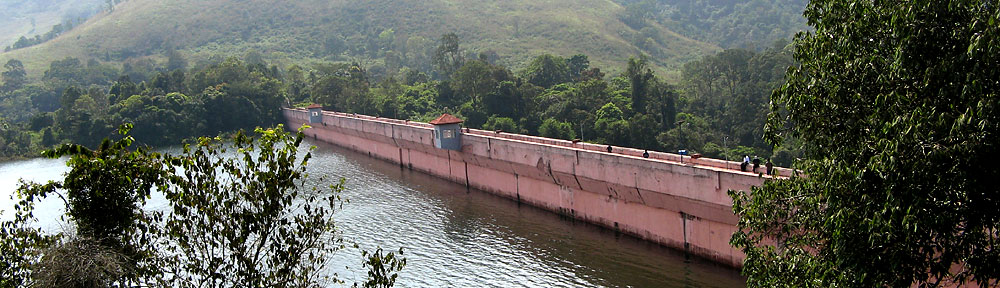
For further reading:
Mullaperiyar– in search of truth
Mullaperiyar and dam safety
Mullaperiyar dam dispute
http://keralaviews.wordpress.com/tag/mullaperiyar/