Kochi Metro project and E. Sreedharan

The controversy over Kochi Metro Rail points to people’s lack of trust over Chief Minister Oommen Chandy and his government, and for that matter, any government in Kerala. They trust octogenarian E. Sreedharan (former MD of Delhi Metro Rail Corporation) to complete the Metro project efficiently and without much time lag.

Mr. Sreedharan naturally wants an organisation behind him and he wants the one that he is familiar with — the Delhi Metro Rail Corporation (DMRC). And DMRC had agreed to be behind him and the only formality that remained was ratification of agreement by the director boards of the DMRC and the Kochi Metro Rail Limited formed to implement the project.

Now the DMRC is backtracking under oblique pressure from politicians and bureaucrats who want to the contract to be entrusted to others.  It is clear that the arguments being advanced against DMRC participation are just being raised as excuses.  While every private company wants to expand, the public sector DMRC just wants to confine itself to Delhi!  It maintains that it is too preoccupied with its work in Delhi that it does not have the resources to undertake work in Kerala.

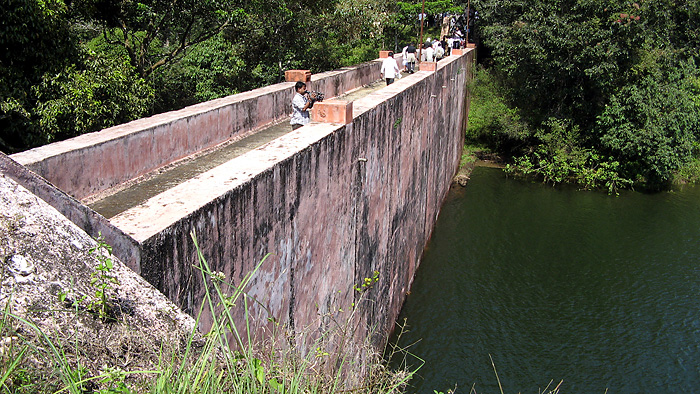
Delhi Metro

Delhi Metro       Photo: Roy Mathew

If this is true, one wonders why it had agreed to participate and had even undertaken preliminary works. If DMRC had any real problems in taking up the work, would not Mr. Sreedharan and others known that?

This is not to say that the DRMC could be the most qualified company to undertake the work. It depended on multinational companies for civil works, design, and installation of signaling and electrical works for Delhi Metro. The coaches were imported. As a contractor for the Delhi airport express metro line, the DMRC had faltered. It had built the line for Reliance and operations had to be suspended in six months for rectification of problems.

However, the bet here is on Mr. Sreedharan who has a clean image. The Opposition and large section of people believe that large scale corruption and delays would occur if Sreedharan is not overseeing the project.

Related blog post:
Project review (in Malayalam)

CBD: Living in Harmony with Nature

The motto “Living in Harmony with Nature,” recommended by the 11thConference of Parties to the Convention on Biological Diversity for activities related to UN Decade on Biodiversity highlights the spirit of the Convention and the Conference that concluded in Hyderabad last week. However, the Conference could only make limited progress in taking decisions towards implementation of targets set at its last conference.biodiversity

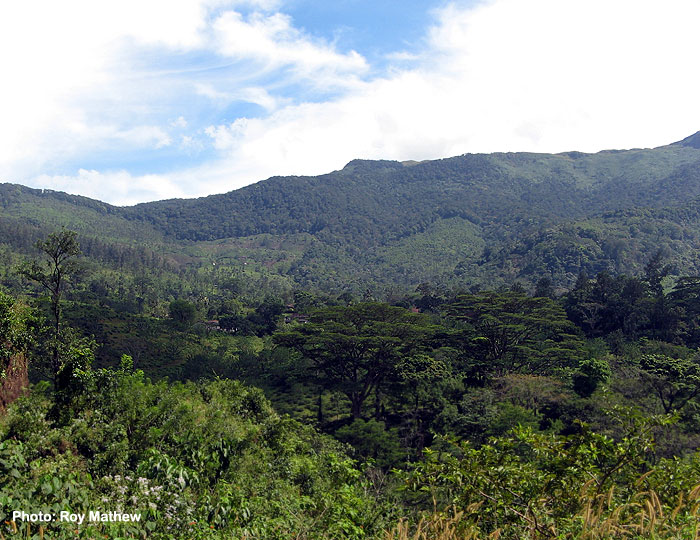
Part of one of the biodiversity hotspots of South India– Agastyakoodam and its environs. View from Bonaccord in Thiruvananthapuram district of Kerala.

India brokered an agreement to double financial flows for implementation of the Convention’s strategic plans to protect biodiversity by 2015.  Prime Minister Manmohan Singh announced India’s ratification of the Nagoya Protocol on access to genetic resources and benefits sharing and made a pledge to allocate US$50 million during India’s two-year COP presidency, for enhancing India’s human and technical resources to attain the Convention’s objectives and for promoting capacity building in developing countries.

The Convention has decided to push for enough number of nations ratifying the Nagoya protocol so that it could come into force and the next conference of parties could focus on implementation. The Conference Secretariat was asked to take steps to develop a draft strategic framework for capacity building.

It called for discontinuation of incentives for that biofuel technologies that may aggravate drivers of biodiversity loss while acknowledging biofuel’s potential positive contribution to mitigating climate change.

It could not do much towards establishing control and regulatory mechanisms for geo-engineering other than advising the precautionary approach. The framework of the Convention may not even be sufficient to deal with larger effects of geo-engineering. The Convention failed to agree on action to address concerns about synthetic biology.

The Conference made an impressive number of decisions on several eco-system related issues, achieving synergies with other international efforts. Progress could be made towards address marine diversity issues such as such as marine

debris and ocean noise. Countries have been very slow in working towards  achieving the Aichi targets and the next conference in South Korea would undertake a mid-term review of progress.

India’s biodiversity and the Convention on Biodiversity
India’s biodiversity & Convention on Biodiversity– Part II

Alternatives to endosulfan

The recommendations of 100 alternatives to endosulfan, approved by the Persistent Organic Pollutants Review Committee to the Stockholm Convention on Persistent Organic Pollutants on October 18, should be an eye-opener for governments and agricultural scientists who were arguing that there were no cheap alternatives.

endosulfan_boyIt is notable that the Committee has also recommended non-chemical alternatives which could indeed work out to be a cheap alternative. This is the first time that a Review Committee of the Stockholm Convention recommends non-chemical alternatives to a chemical proposed for elimination under the Convention.
The Union Agriculture Ministry has long been arguing that there is no alternative to endosulfan and hence it should be banned only in Kerala and Karnataka where intensive use had affected the health and well-being of people. However, evidence is emerging that endosulfan was indeed causing harm to people in other States such as Tamil Nadu, West Bengal and Punjab also. It is high time that the ministry looked at the alternatives suggested by the Committee and promoted ecosystem-based approaches on pest management as well as technical interventions using natural plant extracts in a big way.

The Kerala government has the responsibility to present the findings of various studies and the recommendations of the Committee before the Supreme Court which is considering the case for ban on endosulfan across the country. It is not clear whether the Court has changed its earlier view that no more studies are needed to establish the link between endosulfan and the health effects on people. However, it apparently want expert opinion on nation-wide ban. It is notable that India is already committed to phase out of endosulfan being a party to the Stockholm Convention.

POP Review Committee approves 100 alternatives to endosulfan
Assessment of alternatives to endosulfan
POPRC Report on alternatives
Endosulfan– Spray of Death


Medical emergency in Thiruvananthapuram

Kerala is facing a medical emergency in its capital. Cholera is spreading following failure the city corporation and the government on waste disposal.

The city collector has clamped prohibitory orders under Section 144 (2) of the Criminal Procedure Code against those who deposit waste at public places and water bodies and those who block movement of waste to waste disposal sites of City Corporation. This is against background of intense protests against waste disposal sites of the city which polluted the neighourhoods.

Now that the solid waste treatment plant of the City Corporation at Vilappilsala is closed following public protests, the waste collection and disposal system of the Corporation have come to a standstill for about a year now. People are forced to throw waste here and there and the results are showing. Cholera and diarrhea and other water borne diseases are spreading in the city and suburbs.  Rodent population in the city has multiplied, and Hantavirus that infects people from rats had been the cause of at least one death in the city.

medical emergency

Patients queuing up at a government hospital in Thiruvananthapuram (old photo)

The mosquito population is also increasing and the Incidence of dengue fever has hit a high. Kerala is now the second in the country, after West Bengal, regarding incidence of dengue fever. Dengue fever has been confirmed in about 2000 persons this year officially and the actual number could be two or three times this number as the count does not cover patients admitted to private hospitals.

The measures being taken by the collector such as the ban orders are unlikely to help much in containing the outbreak.  The collector’s order would only force people to keep waste in their premises and terraces.  It does not make a difference whether waste is rotting in the streets or at homes.  Many homes are on only a few cents of land and they have little means of disposing waste properly as the Corporation has stopped collecting them.

Chief Minister Oommen Chandy has miserably failed in keeping his promise that new waste treatment plants would be set up in six months in place of the closed plant at Vilappilsala. He also failed to carry out his promise that protect water supply would be extended to Vizhinjam and neighbourhoods in a year.  Apart from the health of its citizens, this trend is going to hit the tourism potential of Kerala.

Actor Sheila’s entry into politics in limbo

Actress Sheela’s entry into Congress politics so far is a non-starter. This is not surprising to anyone who knows Congress politics and groupism in the State.

Congress leaders in the State would not countenance lateral entry of leaders into the party that would affect their chances. The only one they would willingly or grudgingly tolerate is Rahul Gandhi. Recall the bitterness that the entry of Shashi Tharoor generated in the State unit despite the credentials he presented and the support of the high command.

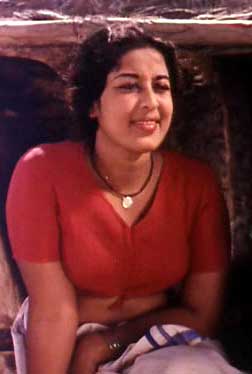
Sheela in film Chemmeen

Actor Sheela in film Chemmeen

Sheela went to none other than Defence Minister A. K. Antony, apparently thinking that he is her best bet. Mr. Antony and his wife warmly received her but cold-shouldered her proposal referring her to KPCC president Ramesh Chennithala. Can Ramesh Chennithala afford to spare her a Rajya Sabha when all the UDF constituents are warring for seats? Can he even think of fielding her in the next elections?

And can she win an election from Kerala? That she was the heartthrob of the older generation on the silver screen is not sufficient for her to get electoral support in Kerala. Even the evergreen hero Prem Nazir could not do that in his heydays, that too despite being sponsored by K. Karunakaran. If one should know the gravity of his failure, remember that Karunakaran was one who had managed to make non-entities like A. Charles and M. R. Raghuchandra Bal to win elections and get foothold in the party.

The politics of green politicians in Kerala

The green brigade in the UDF in Kerala is striking a distinct position compared to rest of the members of the Assembly in the Front. They have also started using the new media for their campaign.  (T. N. Pratapan, V. D. Satheesan, V. T. Balram and Hibi Eden (Congress) K. M. Shaji  (Muslim League )and  M. V. Sreeyams Kumar (SJD) are blogging at GreenThoughtsKerala)

Title image of blog of the MLAs

Title image of blog by V. D. Satheesan, T. N. Pratapan, M. V. Sreeyams Kumar, V. T. Balram, K. M. Shaji and Hibi Eden

The scenario in the Assembly has been changing over the past decade with more members coming forward to propound the cause of environment. The Legislative Committee on Environment has over the years produced well-studied reports. Two decades ago, K. V. Surendranath of CPI was the only member campaigning for environmental causes. On the other side people like Seethi Haji (IUML) asked how it rained at sea if forests were required for precipitation.  Now, there are several members both in the ruling and Opposition fronts wanting to protect the environment. They include Opposition Leader V. S. Achuthanandan who once spoke against environmentalists.

However, a question would arise as to how deep their commitments are.  Are they simply moving with the tide or playing politics? It is notable that almost all members of the green brigade are people who had missed out on ministerial positions. They have an axe to grind against Chief Minister Oommen Chandy and other UDF leaders.  And they know that fighting corruption from within a la Achuthanandan has a market. Yet, that does not make the causes they are expounding less important.

Yes, they are indeed playing politics and it is notable that Mr. Chandy and industries Minister P. K. Kunhalikutty are in the defensive.  Mr. Chandy even said that they are doing the campaign because they are sincere.  May be, people can trust them more than Mr. Achuthanandan who is also expounding the same causes.

If they are sincere, they will persist. Mr. Achuthanandan forgot many of the causes he expounded when he came to power. The litmus test for green politicians of UDF too would be what they do when they come to power.

Update: Well, we did not have to wait until they come to power to know how steadfast they would be on their views. The green politicians are now supporting tourism projects such as that proposed in Nelliyampathy disregarding questions whether the land proposed to be used for such projects are forests or environmentally fragile areas. They do say that they changed their stand because Chief Minister Oommen Chandy has conceded their demands including environmental impact assessment of all projects under Emerging Kerala initiative.

Advertising State lotteries: is it a good deed?

Can buying lotteries be a good deed?  The government says so in its advertisements for Kerala lotteries. It argument may seem right as the revenues from the Karunya lotteries of State government is to be spent for funding assistance to poor patients requiring treatment for serious ailments affecting vital organs of the body.

Lotteries nurture the instinct for gambling. Everybody knows that most of the buyers of the lottery never benefit from it whereas the seller always benefits. However, running of lotteries by the government has been justified on the ground that it provides employment to many and satisfy the urge of the people to try their luck. The justifications get a boost when the government saysTelevision advertisement for Kerala Lotteries that the returns are to be used to fund care of critically ill patients. It also serves as a good marketing strategy for the State lotteries.

However, the picture changes when one examines these arguments from another perspective. The government is resorting to creation of non-productive employment instead of creating real employment opportunities.  Free treatment of poor patients for serious ailments is not a priority of government: it is not willing to spend tax revenues for the purpose; but want people with gambling instinct to do the job. It is promoting the instinct by using fund raising aspect of the lottery for marketing purposes and terming it as a good deed. The marketing campaign would lead to people imbibing wrong values: the buyer of the lottery hides his greed behind altruism.

Mullaperiyar and Kerala’s technical studies

Why did the empowered committee accept the studies done by Annamalai University in Tamil Nadu in preference to the finding of the professors of Indian Institute of Technology (Roorkee and Delhi)? Was it bias? Or did not it have something to do with the quality of the studies.

It is well known that some of the studies were done quickly, just months before they were to be presented before they were to be submitted to the court. The draft of the first part had come with several mistakes that  officials of the Mullaperiyar Special Cell (Kerala) had to go to Delhi to get them corrected. The second part of the seismic stability studies could not even be completed and submitted to the Supreme Court in time.

Expert-Eyes had earlier discussed the errors in the article  Mullaperiyar and environmental impact of raising the water level. Readers and experts can look at the structural stability analysis at http://expert-eyes.org/mullaperiyar/tremours/index.html

Why did the reputed experts of IIT wanted the study to be restricted to official use only. Were they avoiding public scrutiny? If one looks at the executive summary, it has more background than findings. Though Water Resources Minister P. J. Joseph had told a press conference in reply to questions that the Irrigation Design and Research Board would publish the PMF and flood routing studies on Mullaperiyar Dam done by IIT, Delhi, and Seismic Stability of Mullaperiyar Composite Dam done by IIT, Roorkee, on its Web site; it is yet to do so. The Department is also refusing to release copies of these and other studies under the Right to Information Act.

See:
Mullaperiyar: Directive against disclosure of dam break analysis
Mullaperiyar: behind the veil
IIT Roorkee seismic report has (only) value of paper says TN


Dissent in UDF and LDF

Both the ruling and Opposition fronts in Kerala are plagued by divisions. However, these should be viewed as positive signs for the State’s polity. For, the divisions are over political morality.

The Congress and the Muslim League were and are at odds over certain issues ranging from induction of the fifth League Minister in the Cabinet to several policies in the education sector. However, the Leaders of both parties have seen to it they don’t spill over to affect governance and cohesion of the United Democratic Front.

Congress leaders like V. M. Sudheeran and T. N. Pratapan are in the forefront of opposing various policies of the government such as the mineral sands and abkari policies and measures to help estate owners and land mafia. Government moves to regularise filling up of paddy fields have come in for serious criticism though the government is yet to budge.

Hartal day

ON A HARTAL DAY: M. G. Road near Secretariat in Trivandrum look deserted. The hartal was called by the CPI (M) in protest against the arrest of its Kannur district secretary P. Jayarajan in Shukkur murder case.

Constituents of the Left Democratic Front have hardly lend any support to widespread protests by the CPI (M) over the arrest of party Kannur district secretary P. Jayarajan in the Abdul Shukkur murder case including the hartal.  In fact, CPI and other constituents are not willing to support murder politics. They want the law to take its course in the murder of T. P. Chandrasekharan and others.

Opposition Leader V. S. Achuthanandan had been spearheading a fight within the CPI (M) over what he calls its shift away from leftist polices. His strategy is to take a few steps forward and a few steps backward. He had demanded proper investigation into the murders and had not opposed the arrests by the police in the Chandrasekharan murder case. However, he said that the arrest of Mr. Jayarajan was partisan.

Members of the Assembly care when it comes to drug prices

Most of the members of the Assembly took care to attend the special discussion on the report of an Assembly committee on drug prices and related issue in the House on Thursday. There was unanimity in the House that the skyrocketing drug prices should be checked. The members cared when it came to health care and medicines.

They pressed the Health Minister V. S. Sivakumar to make it mandatory for doctors to prescribe drugs by their generic names and Mr. Sivakumar announced that it would be made mandatory for doctors in government hospitals. As to other doctors, he would have to seek legal opinion.

Ruling Front members even egged on the Minister to turn the Kerala Medical Services Corporation into a super store for bulk purchase and supply of drugs even to the private medical shops. But, Mr. Sivakumar appeared to reluctant; citing infrastructural, financial and logistical problems. However, he was forced to announce that the Health Secretary would be asked to examine the feasibility.

The two proposals, if implemented, would take the State a long way in checking drug prices.  Legally, a medical shop could now supply on the drug prescribed by the doctor. If it is by the brand name, he would have to supply that brand and not any of the alternatives. If prescription by generic name is introduced, it would give the consumer a choice. He can buy the brand and price level he chooses. (As of now, medicines are the only items over which the consumer has no choice.)

This would have an impact on prices as the price difference between various brands can be very high. Some branded drugs prescribed by the doctors could be several times higher than the generic variant. Now Internet sites such as PatientIndia are available that could help the consumer to make the choice by listing prices of the generic and branded drugs. Advice can also be received from the doctor regarding quality, but the final choice would be that of the patient.

If the Corporation enters the wholesale market in a big way, it would surely bring down prices provided that corruption in the organisation is checked. It can also help to check quality. It is imperative that the government would have to ensure quality of generic drugs when doctors start prescribing them.

For further reading:
Doctors to prescribe generic drugs in govt. hospitals