ISRO’s 100th mission: It is not a century

The Indian Space Research Organisation carried out its 100th space mission with the successful launch of the PSLV-C21 rocket from Satish Dhawan Space Centre at Sriharikotta on September 9, 2012. The description ‘100th mission’ may be a misnomer as the count is a total of 62 satellite missions and 37 launch vehicle missions plus a space capsule recovery experiment. (The launching of the vehicle and placing of a satellite in orbit are treated as separate missions by ISRO.) The launch vehicles sometimes carried more than one satellite, as was the case on Sunday when PSLV-C12 carried Japanese as well as a French satellite.

Launchpad at Sriharikotta

Rocket Launchpad at Satish Dhawan Space Centre, Sriharikotta, India

For the French, there may be some irony. They have turned to India for launch of their 712-kg earth observation satellite SPOT-6 using a launch vehicle, the technology for which was originally developed by France. India had obtained the liquid propulsion technology used in French ‘Viking’ engine as per an agreement in the seventies. The crucial second and fourth stages of PSLV are powered by modified engines using the French technology.

ISRO’s achievement was in fabricating many of the components indigenously over the years and developing a few hundred technologies that could add value. This helped to bring down the costs, finally attracting the French to use India’s launch vehicle for its satellite. It is the first time that a French satellite is being launched from India while several Indian satellites have been launched from French Guiana (where European Space Agency’s primary launch site is located).

ISRO has been taking the beaten path in the development of rocket technology instead of looking for innovative technology. The decision to borrow cryogenic technology, instead of developing it on its own, turned out to be disastrous as the indigenous version of the Russian cryogenic technology is yet to take off. The aim was to develop indigenous cryogenic engine modeled on the Russian cryogenic module with similar performance parameters.

The full technology transfer did not take place due to American pressure on Russia and ISRO’s attempt to fabricate it based on the design it had obtained from the Russian space agency ran into problems and repeated test failures. It would now be an uphill task for ISRO to complete the development and modify it for future needs.

As such, the 100th mission marks stagnation in space technology development rather than a great achievement. India may have to revamp its technology development plans if it is to keep pace.
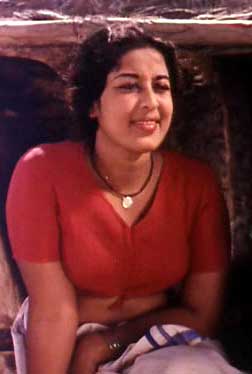
Actor Sheila’s entry into politics in limbo

Actress Sheela’s entry into Congress politics so far is a non-starter. This is not surprising to anyone who knows Congress politics and groupism in the State.

Congress leaders in the State would not countenance lateral entry of leaders into the party that would affect their chances. The only one they would willingly or grudgingly tolerate is Rahul Gandhi. Recall the bitterness that the entry of Shashi Tharoor generated in the State unit despite the credentials he presented and the support of the high command.

Sheela in film Chemmeen

Actor Sheela in film Chemmeen

Sheela went to none other than Defence Minister A. K. Antony, apparently thinking that he is her best bet. Mr. Antony and his wife warmly received her but cold-shouldered her proposal referring her to KPCC president Ramesh Chennithala. Can Ramesh Chennithala afford to spare her a Rajya Sabha when all the UDF constituents are warring for seats? Can he even think of fielding her in the next elections?

And can she win an election from Kerala? That she was the heartthrob of the older generation on the silver screen is not sufficient for her to get electoral support in Kerala. Even the evergreen hero Prem Nazir could not do that in his heydays, that too despite being sponsored by K. Karunakaran. If one should know the gravity of his failure, remember that Karunakaran was one who had managed to make non-entities like A. Charles and M. R. Raghuchandra Bal to win elections and get foothold in the party.

Advertising State lotteries: is it a good deed?

Can buying lotteries be a good deed?  The government says so in its advertisements for Kerala lotteries. It argument may seem right as the revenues from the Karunya lotteries of State government is to be spent for funding assistance to poor patients requiring treatment for serious ailments affecting vital organs of the body.

Lotteries nurture the instinct for gambling. Everybody knows that most of the buyers of the lottery never benefit from it whereas the seller always benefits. However, running of lotteries by the government has been justified on the ground that it provides employment to many and satisfy the urge of the people to try their luck. The justifications get a boost when the government saysTelevision advertisement for Kerala Lotteries that the returns are to be used to fund care of critically ill patients. It also serves as a good marketing strategy for the State lotteries.
However, the picture changes when one examines these arguments from another perspective. The government is resorting to creation of non-productive employment instead of creating real employment opportunities.  Free treatment of poor patients for serious ailments is not a priority of government: it is not willing to spend tax revenues for the purpose; but want people with gambling instinct to do the job. It is promoting the instinct by using fund raising aspect of the lottery for marketing purposes and terming it as a good deed. The marketing campaign would lead to people imbibing wrong values: the buyer of the lottery hides his greed behind altruism.

Mullaperiyar and Kerala’s technical studies

Why did the empowered committee accept the studies done by Annamalai University in Tamil Nadu in preference to the finding of the professors of Indian Institute of Technology (Roorkee and Delhi)? Was it bias? Or did not it have something to do with the quality of the studies.

It is well known that some of the studies were done quickly, just months before they were to be presented before they were to be submitted to the court. The draft of the first part had come with several mistakes that  officials of the Mullaperiyar Special Cell (Kerala) had to go to Delhi to get them corrected. The second part of the seismic stability studies could not even be completed and submitted to the Supreme Court in time.

Expert-Eyes had earlier discussed the errors in the article  Mullaperiyar and environmental impact of raising the water level. Readers and experts can look at the structural stability analysis at http://expert-eyes.org/mullaperiyar/tremours/index.html

Why did the reputed experts of IIT wanted the study to be restricted to official use only. Were they avoiding public scrutiny? If one looks at the executive summary, it has more background than findings. Though Water Resources Minister P. J. Joseph had told a press conference in reply to questions that the Irrigation Design and Research Board would publish the PMF and flood routing studies on Mullaperiyar Dam done by IIT, Delhi, and Seismic Stability of Mullaperiyar Composite Dam done by IIT, Roorkee, on its Web site; it is yet to do so. The Department is also refusing to release copies of these and other studies under the Right to Information Act.

See:
Mullaperiyar: Directive against disclosure of dam break analysis
Mullaperiyar: behind the veil
IIT Roorkee seismic report has (only) value of paper says TN


Dissent in UDF and LDF

Both the ruling and Opposition fronts in Kerala are plagued by divisions. However, these should be viewed as positive signs for the State’s polity. For, the divisions are over political morality.

The Congress and the Muslim League were and are at odds over certain issues ranging from induction of the fifth League Minister in the Cabinet to several policies in the education sector. However, the Leaders of both parties have seen to it they don’t spill over to affect governance and cohesion of the United Democratic Front.

Congress leaders like V. M. Sudheeran and T. N. Pratapan are in the forefront of opposing various policies of the government such as the mineral sands and abkari policies and measures to help estate owners and land mafia. Government moves to regularise filling up of paddy fields have come in for serious criticism though the government is yet to budge.

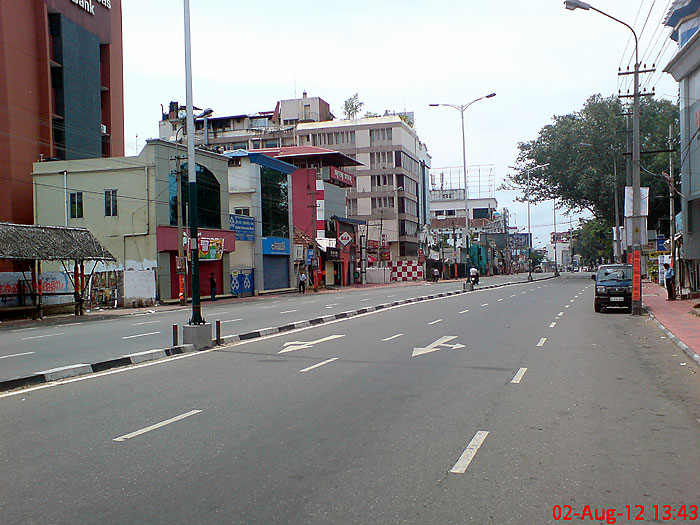
Hartal day

ON A HARTAL DAY: M. G. Road near Secretariat in Trivandrum look deserted. The hartal was called by the CPI (M) in protest against the arrest of its Kannur district secretary P. Jayarajan in Shukkur murder case.

Constituents of the Left Democratic Front have hardly lend any support to widespread protests by the CPI (M) over the arrest of party Kannur district secretary P. Jayarajan in the Abdul Shukkur murder case including the hartal.  In fact, CPI and other constituents are not willing to support murder politics. They want the law to take its course in the murder of T. P. Chandrasekharan and others.

Opposition Leader V. S. Achuthanandan had been spearheading a fight within the CPI (M) over what he calls its shift away from leftist polices. His strategy is to take a few steps forward and a few steps backward. He had demanded proper investigation into the murders and had not opposed the arrests by the police in the Chandrasekharan murder case. However, he said that the arrest of Mr. Jayarajan was partisan.

Members of the Assembly care when it comes to drug prices

Most of the members of the Assembly took care to attend the special discussion on the report of an Assembly committee on drug prices and related issue in the House on Thursday. There was unanimity in the House that the skyrocketing drug prices should be checked. The members cared when it came to health care and medicines.

They pressed the Health Minister V. S. Sivakumar to make it mandatory for doctors to prescribe drugs by their generic names and Mr. Sivakumar announced that it would be made mandatory for doctors in government hospitals. As to other doctors, he would have to seek legal opinion.

Ruling Front members even egged on the Minister to turn the Kerala Medical Services Corporation into a super store for bulk purchase and supply of drugs even to the private medical shops. But, Mr. Sivakumar appeared to reluctant; citing infrastructural, financial and logistical problems. However, he was forced to announce that the Health Secretary would be asked to examine the feasibility.

The two proposals, if implemented, would take the State a long way in checking drug prices.  Legally, a medical shop could now supply on the drug prescribed by the doctor. If it is by the brand name, he would have to supply that brand and not any of the alternatives. If prescription by generic name is introduced, it would give the consumer a choice. He can buy the brand and price level he chooses. (As of now, medicines are the only items over which the consumer has no choice.)

This would have an impact on prices as the price difference between various brands can be very high. Some branded drugs prescribed by the doctors could be several times higher than the generic variant. Now Internet sites such as PatientIndia are available that could help the consumer to make the choice by listing prices of the generic and branded drugs. Advice can also be received from the doctor regarding quality, but the final choice would be that of the patient.

If the Corporation enters the wholesale market in a big way, it would surely bring down prices provided that corruption in the organisation is checked. It can also help to check quality. It is imperative that the government would have to ensure quality of generic drugs when doctors start prescribing them.

For further reading:
Doctors to prescribe generic drugs in govt. hospitals

Not being a vote bank, endosulfan victims fail to get their due

The government has declined to write off the loans for endosulfan victims though it is offering debt relief to farmers and fishermen.  The government says it did not have the money to write off the loans of the families of the victims amounting to about Rs. 50 crores while it is willing to find bigger sums for farmers and fishermen.

BLINDED FOR LIFE: Devikiran and Jeevanraj, identified as vicitms of endosulfan by government, with their mother

The loans were taken mostly taken for the treatment of the victims and many families are not in a position to repay them.  The government plans to pay the victims compensation of Rs. 5 lakhs / Rs. 3 lakhs recommended by the National Human Rights Commission. These are to be paid in installments and through the banks.  For many, this would only suffice to repay their loans. Some may not even get the amounts as the banks would adjust them against their loans.

Compensation for victims can be considered adequate only if that covers the treatment costs and ensure a decent living. Farmers and fishermen could get their demands conceded because they are better organised and the politicians have stake in terms of their votes. The endosulfan victims are no a vote bank. However, the situation is changing with the victims and their families themselves getting organised and coming forward to fight their cause. (Till, now the fight for justice to the victims were being fought by outsiders or those marginally affected by the spraying of the pesticide by the State-owned Plantation Corporation of Kerala). The government will heed them when get organised and stand together forgetting any communal or other considerations.

Proscribing adolescent sex by law

If I recall correctly, it was Erskin May who had said something like that no law could be enforced that the majority is unwilling to obey.

To some extent, the Protection of Children from Sexual Offences Bill 2011, passed by the Indian Parliament, falls into this category. The Bill seeks to make even consensual sexual contact with a girl under 18 a criminal offence. This law is proposed to be enforced when 30 per cent of the girls in India aged between 15 and 19 are married off. According to a report of a survey conducted by UNICEF between 2000-2010, 22 to 24 per cent of women in India became mothers before attaining adulthood. About eight per cent of the adolescents had sex before the age of 15.

The law is proposing to proscribe all this. How effectively this can be done is a moot question. However, the more serious implication of the law is that it seeks to make sex between consenting adolescents a crime. Young boys could be hauled up for having a consensual sex with their girl friends. This can often turn into police officials terrorizing boys dating or even talking to a girl, given the nature of law enforcement authorities in the country. The girl too could be under risk under such situations.  It could also lead to corruption rather than protection of girls, as the punishment could be jail for three years or more. Even eve teasing that could be termed as sexual harassment and would attract up to three years of jail.

The Bill seeks to make sexual offences against girls by those in authority an aggravated crime attracting longer terms of imprisonment. This is a welcome measure. The law should also discriminate between those committing organised crimes against girls or men aged above 21 exploiting girls and consensual teen age or adolescent sex. Actions resulting from the love or even lust by adolescents should not be penalised. What are needed here is guidance and sex education and not a law proscribing sex.

Details of the Bill