Neo colonialism on the climate change front

As India heads for Doha discussions on climate change this week, a question that arises is whether we would be entering into agreements similar to the ones the princely States of India entered with colonial powers. Like the way colonialism stymied our development, the climate talks too have the potential to crush our growth.

An old story
Pepper attracted foreign traders to Kerala for centuries and one of the things the Europeans wanted, back in the 18th century, was runner shoots of black pepper vines for planting.  As the story goes, then ruler of Calicut Zamorin asked his minister Mangattachan about the wisdom of allowing planting material to be taken to Europe when pepper exports earned much money for Kerala.  The Minister’s reply was that they could not take away the Thiruvathira Njattuvela. [Najattuvela means position of sun and there are 27 njattuvelas in Malayalam calendar. The Thiruvathira Njattuvela (15 days), occurs around the middle of South West monsoon which is considered suitable for planting shoots of pepper vines.] However, the situation now is that even the Thiruvathira Njattuvela would be taken away by the over-consumption of developed nations.

_________________________________________________________________________

The 18th session of the Conference of the Parties to the United Nations Frame Work Convention on Climate Change and the eighth session of the Conference of the Parties serving as the Meeting of the Parties to the Kyoto Protocol takes place from November 26 to December 7, 2012, at the Qatar National Convention Centre in Doha, Qatar.

________________________________________________________________________


Carbon  loads

Historically, the USA has emitted nearly 50 times more carbon dioxide into the atmosphere than India.  Rich countries have been responsible for about 70 per cent of the emissions between 1840 and 2006. (CSE ) However, they are not willing to shoulder the burden of reducing emissions in proportion.  The USA is yet to agree to bring down their emission levels to that of 1990 while the European Union has already brought it down by 16 per cent below1990 levels.

Global emissions have grown from 534 million tonnes of carbon in 1900 to 9265 million tonnes in 2011 (Earth Policy Institute).  Per capita emissions of USA were more than ten times that of India in 2011. And there is urgency in addressing the problem because climate change is at the doors.  However, countries are not making enough commitments to check global warming.

At Doha, developed countries would be trying to eliminate the differentiation between the developed and developing countries in cutting emissions. This has to be fought against by developing countries. The developed countries need be accountable for the carbon load they had dumped on the world knowingly and unknowingly over the years.


Forest Minister’s prescription for tiger menace

Kerala Forest Minister K. B. Ganesh Kumar has directed forest officials that tigers straying into populated areas should be trapped and kept in the zoo. This goes against the spirit of the Wildlife (Protection) Act.

Tiger in zooThe Forest Minister should be probing the real reasons for tigers straying out of the wild instead of suggesting quick fix solutions. Some people have suggested that there is an “over-abundance” of tigers in Wayanad now. This needs a closer look.
In last few years, tigers have moved into areas they were not seen at least for the last few decades. There is indication that the tiger population in the State has gone up and tigers have moved into adjoining areas. In places like Kottoor, no conflicts between the newly arrived tigers and tribals living in the area have been reported.  This may be because the forests are healthy and with adequate availability of prey.  The status of forests around Agastyarkoodam had improved in recent years but the same cannot be said for Wayanad.

That a tiger need a territory for itself is well known. So, it only natural that tigers move out as their numbers grows.  With camera trappings and other technologies available now, the number tigers and the area available for them can easily be determined. If there are too many tigers as claimed, measures to shift some of the tigers to other suitable areas should be worked out. If it is not a problem of territory, steps should immediately be taken to improve status of forests as in Wayanad.  Studies in this respect should cover the neighbouring States of Karnataka and Tamil Nadu. It is possible that some problem in those States such as shortage of water could have forced the tigers to flee.

Till the studies are over, the Forest Department can tackle the lifting of domestic animals by tigers by providing adequate compensation. If compensation is good enough, agitated people could be pacified as long as there are no attacks on humans.  So, the Minister’s quick fix solution can perhaps wait.

Meanwhile, the Department should speed up its programme to shift people living within the Wayanad Wildlife Sanctuary to other areas. This is a voluntary programme and people living in pockets inside the forests are willing to relocate. (This may not apply to people living on the periphery who are also threatened by tiger kills.)

Update:
It has turned out that the tiger that caused all the trouble was an unhealthy one. In such isolated cases, the Forest Minister’s prescription is correct. However, it should not be applied in all cases of tigers staying into populated areas. Much of the public protests,  which forced the Minister to make his statement, was the result of deliberate campaign and rumour mongering by vested interests.

Related: Media frenzy over tiger kills


A. K. Antony’s criticism is a warning to Congress-led coalition in Kerala

Defence Minister A. K. Antony has issued a warning to the UDF government in Kerala by expressing his anguish over the situation in Kerala at a function of Indo-Russian firm BrahMos Aerospace in Thiruvananthapuram.  The Defence Minister said that though Chief Minister Oommen Chandy and P. K. Kunhalikutty have been asking for projects for the State, he was not courageous enough to locate any project in Kerala after the UDF government came to power.

Defence Minister A. K. Antony

Defence Minister A. K. Antony in his office in New Delhi

Though Antony did not say it directly, he was warning that the Congress led coalition in the State (UDF) would not be able to retain the seats it had won in the last Lok Saba Elections unless its performance improves. It is significant that his warning comes at a time when Prime Minister Manmohan Singh has reshuffled his Cabinet with a view to the elections due in 2014. As the Number Two in the Union Cabinet, Antony has to see that the Congress performs well in the next elections.

The UDF had won 16 seats in the last Lok Sabha election out of 20. Every school boy knows that the Front would not be able to retain them in the next elections under the present circumstances, not to speak of winning more seats.  When he was the Chief Minister in the State, Mr. Antony had not been able to lead the Front to a victory in the Assembly elections. As Union Minister he wants to be one who has contributed to victory of the Front in the next Lok Sabha elections.  However, he is admitting that he was unable to do anything for the State because of the situation in the State. He was not getting the cooperation he wanted.

It is also notable that Mr. Antony praised the (previous) LDF government in Kerala. He knows only too well that the Congress will have to fall back on the Left too if it did not win enough seats to form a government at the Centre.  So, he is building bridges. It is also a fact the previous government had facilitated establishment of defence projects in the State.

Antony could also be concerned about a number of other issues.  There is growing discord among the ruling Front constituents. They are even making unethical bargains. The front could lose votes if Congress played to their tunes on some of the controversial positions they are taking. There is also considerable discord in the Congress. The proposed reorganisation of KPCC is getting delayed. All this should worry Mr. Antony more than anyone else. So, it is not surprising that he has fired a salvo against the UDF government, though he is unlikely to repeat that as elections come closer.  The crucial point is how far the Congress and UDF constituents in the State would heed his warning and act in larger interests.

Tailpiece:
Above all these, there is a personal factor to Mr. Antony’s criticism. Image-conscious Antony is hurt by the fact that allegations had been raised over the take over the Kerala Hitech Industries by joint venture Brahmos Aerospace and that neither Mr. Chandy nor Kunhalikutty had come to his defence. In fact, the INTUC unit in the company joined hands with the AITUC union which raised the allegations. Mr. Antony would not have voiced his concerns openly but for this factor. His remarks stemmed from personal hurt and diminishing influence in Kerala politics. (Revised and tailpiece added as post script on 17/11/2011).

Conclusions of empowered committee of SC in Mullaperiyar case

The final hearing of the Mullaperiyar case is likely to begin in February next year before the Supreme Court. (The date is tentatively fixed as February 19, 2013). The report of the Empowered Committee of the Supreme Court on Mullaperiyar Dam has gone totally against Kerala. So, Kerala will have to disprove the Committee’s findings or advance fresh and acceptable arguments if it is to win the case. The Court has said that that it would not accept fresh evidence including the Dam Break Analysis.

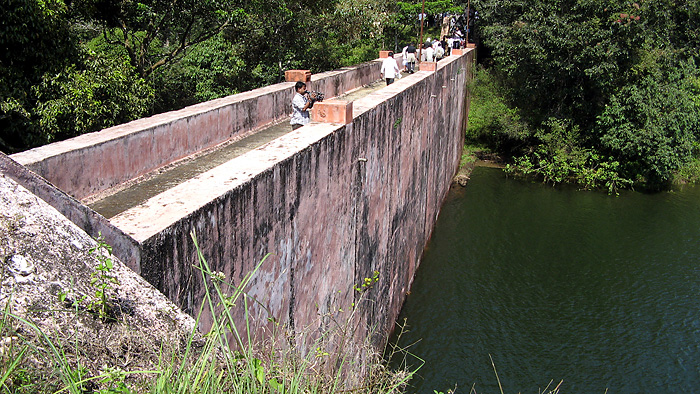
Baby dam

Baby dam saddling the main Mullaperiyar dam. Repairs were carried out to this dam despite objection from Kerala but with tacit support by officials. Another round of repairs are underway now, reportedly with the permission of the courts.      Photo: Roy Mathew

It is notable that the Committee has suggested repairs to the dam even while holding that the dam was hydrologically, structurally and seismically safe. The repairs have already begun.

The repairs proposed include treatment of upstream surface of dam, reaming of drainage holes, instrumentation and grouting of dam body. It has also suggested “periodical monitoring, analysis and leading away the seepage from toe of the dam towards downstream “.

The Committee found that the dam has not been adversely affected by leeching of lime dissolved in seepage water and rejected Kerala’s contentions in this regard. (That leaching has occurred is something that even Tamil Nadu had admitted. The dam had already been grouted for this reason and further grouting is proposed by the Committee itself. )
It said that the precautionary principle is not applicable as the dam has been found safe, and added that the Dam Break Flood Analysis and Emergency Action Plan do serve as precautionary measures. The findings of studies by Indian Institute of Technology, Roorkie and Delhi were rejected.

The Committee said that it did not accept the scare of a dam break flood wave because the Kerala government had not prepared dam break flood analysis. (The dam break analysis has since been done and it leaves little doubt that a dam break would be catastrophic.)

Conclusions of the Report in full at Expert-Eyes.org
Appraisal and analysis of various studies by EC Committee(Chapter VI of report)
Report of the Empowered Committee of the Supreme Court– all chapters
Mullaperiyar Dam break analysis by IIT Roorkee
Structural stability analysis of Mullaperiyar dam

CBD: Living in Harmony with Nature

The motto “Living in Harmony with Nature,” recommended by the 11thConference of Parties to the Convention on Biological Diversity for activities related to UN Decade on Biodiversity highlights the spirit of the Convention and the Conference that concluded in Hyderabad last week. However, the Conference could only make limited progress in taking decisions towards implementation of targets set at its last conference.biodiversity

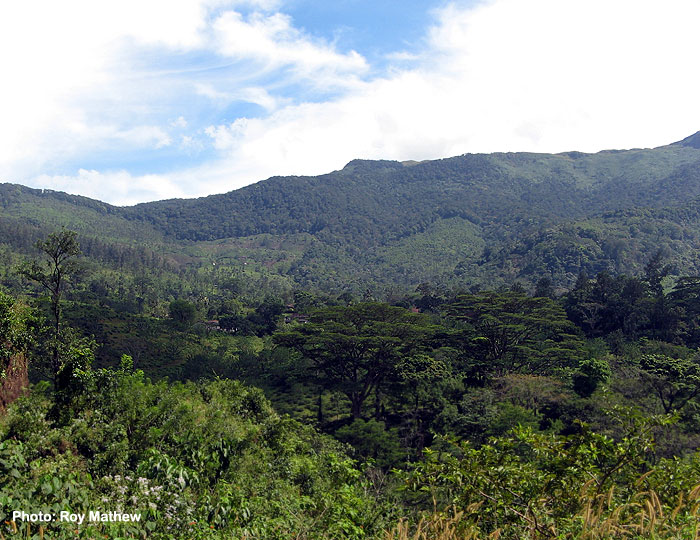
Part of one of the biodiversity hotspots of South India– Agastyakoodam and its environs. View from Bonaccord in Thiruvananthapuram district of Kerala.

India brokered an agreement to double financial flows for implementation of the Convention’s strategic plans to protect biodiversity by 2015.  Prime Minister Manmohan Singh announced India’s ratification of the Nagoya Protocol on access to genetic resources and benefits sharing and made a pledge to allocate US$50 million during India’s two-year COP presidency, for enhancing India’s human and technical resources to attain the Convention’s objectives and for promoting capacity building in developing countries.

The Convention has decided to push for enough number of nations ratifying the Nagoya protocol so that it could come into force and the next conference of parties could focus on implementation. The Conference Secretariat was asked to take steps to develop a draft strategic framework for capacity building.

It called for discontinuation of incentives for that biofuel technologies that may aggravate drivers of biodiversity loss while acknowledging biofuel’s potential positive contribution to mitigating climate change.

It could not do much towards establishing control and regulatory mechanisms for geo-engineering other than advising the precautionary approach. The framework of the Convention may not even be sufficient to deal with larger effects of geo-engineering. The Convention failed to agree on action to address concerns about synthetic biology.

The Conference made an impressive number of decisions on several eco-system related issues, achieving synergies with other international efforts. Progress could be made towards address marine diversity issues such as such as marine

debris and ocean noise. Countries have been very slow in working towards  achieving the Aichi targets and the next conference in South Korea would undertake a mid-term review of progress.

India’s biodiversity and the Convention on Biodiversity
India’s biodiversity & Convention on Biodiversity– Part II

Alternatives to endosulfan

The recommendations of 100 alternatives to endosulfan, approved by the Persistent Organic Pollutants Review Committee to the Stockholm Convention on Persistent Organic Pollutants on October 18, should be an eye-opener for governments and agricultural scientists who were arguing that there were no cheap alternatives.

endosulfan_boyIt is notable that the Committee has also recommended non-chemical alternatives which could indeed work out to be a cheap alternative. This is the first time that a Review Committee of the Stockholm Convention recommends non-chemical alternatives to a chemical proposed for elimination under the Convention.

The Union Agriculture Ministry has long been arguing that there is no alternative to endosulfan and hence it should be banned only in Kerala and Karnataka where intensive use had affected the health and well-being of people. However, evidence is emerging that endosulfan was indeed causing harm to people in other States such as Tamil Nadu, West Bengal and Punjab also. It is high time that the ministry looked at the alternatives suggested by the Committee and promoted ecosystem-based approaches on pest management as well as technical interventions using natural plant extracts in a big way.

The Kerala government has the responsibility to present the findings of various studies and the recommendations of the Committee before the Supreme Court which is considering the case for ban on endosulfan across the country. It is not clear whether the Court has changed its earlier view that no more studies are needed to establish the link between endosulfan and the health effects on people. However, it apparently want expert opinion on nation-wide ban. It is notable that India is already committed to phase out of endosulfan being a party to the Stockholm Convention.

POP Review Committee approves 100 alternatives to endosulfan
Assessment of alternatives to endosulfan
POPRC Report on alternatives
Endosulfan– Spray of Death


Kashmir’s highways remain unsafe

Kashmir’s highways are one of the most precarious in the country. You travel through precipitous ridges: a small slip, your vehicles could fall into deep gorges. The width and condition of the highway from Jammu to Srinagar are so poor that you often have to move through the outer edges of the highway which may not be stable.

Meandering highway from Jammu to Kashmir.                    Photo:  Roy Mathew

Though highways are being widened and developed from Jammu to Punjab, much of the highway from Jammu to Sri Nagar remain in bad shape despite heavy traffic. The Border Roads Organisation is in charge of the development of the highway. However, it has so far failed to develop safe roads, which is challenging task. The highway passes through mountain slopes and slopes below and above are prone to landslips at many places. There are also areas where boulders would roll down on to the road. The situation poses a major technological challenge which is yet to be addressed.

Army trucks

A large number of army trucks and vehicles move up and down the highway every day, often causing congestion.                                                               Photo: Roy Mathew

Road accidents continue to be on the high side in the State. During three years from 2009 to 2011, as many as 3,288 persons were killed and 27,165 injured in 18,786 accidents in the State. The number of accidents was on the increase during these years. With militancy on the wane, it is said that the more persons are now getting killed in road accidents than in terrorist attacks and army operations.

The Centre recently sanctioned Rs. 1248 crore to Jammu and Kashmir for improving connectivity to its villages. The State government has plans to develop the historical Mughal road for ecotourism purposes. These are ecologically sensitive areas with rich flora and fauna and water bodies. The road development has to keep in view the conservation of wildlife habitats and ecosystems.

Related Post:
Kashmiri Wedding photographed on a houseboat


India’s biodiversity & Convention on Biodiversity– Part II

The 11th meeting of the Conference of Parties to the Convention on Biodiversity, to be held in Hyderabad from October 8 to 19, will take stock of the Nagoya Protocol on access to genetic resources and benefit-sharing.  It will also review the progress of targets set to check biodiversity loss.

The Nagoya Protocol is about access to genetic resources and benefit sharing in a fair and equitable manner. Even as private parties and companies are allowed access to genetic resources and traditional knowledge held by communities, it envisages strong regulatory frame works and capacity building by nations ratifying the protocol.  So far only six countries have ratified the Protocol, and it would come into force only after at least 50 countries ratified the Protocol.

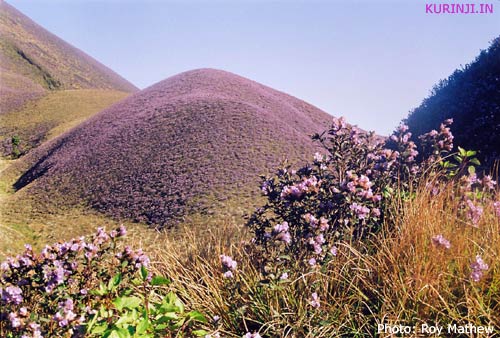
Kurinji flowers (Strobilanthes kunthiana)In this UN decade of Biodiversity, the Convention has set forth to at least halve the loss of natural habitats including forests, and where feasible, bring the rate of loss to zero.  It wants to establish a conservation target of 17% of terrestrial and inland water areas and 10% of marine and coastal areas by 2020 and restore at least 15% of degraded areas through conservation and restoration activities and make special efforts to reduce the pressures faced by coral reefs. There are also other targets.

India had proposed to increase the forest and tree cover to 33 per cent by 2012. However, the forest survey in 2011 showed that the forest and tree cover was only 23.81 per cent.  (India had, however, added three million hectares of forests and tree cover over the last three decades when most developing countries lost forests).

At Hyderabad, the delegates are to review the work on island biodiversity and address ecosystem restoration, traditional knowledge systems, marine and coastal biodiversity, biodiversity and climate change, biodiversity and development, and several other ecosystem-related and cross-cutting issues. These are subjects of immense import to India which harbours seven to eight per cent of the World’s biodiversity. (Of the 34 globally identified biodiversity hot spots, three are in our region—the Himalayas, Indo-Burma, and Western Ghats and Sri Lanka).  In terms of plant biodiversity, India ranks tenth in the World.

In the high level segment of the Conference from October 16 to 19, Heads of States and Ministers will be taking decisions on strategic plan for checking biodiversity loss, protection of livelihoods and reduction of poverty by conserving biodiversity, marine and coastal biodiversity and implementation of the Nagoya protocol. If the right decisions are taken, it would immensely benefit the poor and keep the world away from disaster that the loss of biodiversity could bring upon the globe. However, in the Conferences like this with their protracted negotiations, this is easier said than done.

India’s biodiversity and the Convention on Biodiversity

The Conference of Parties to the Convention on Biological Diversity, meeting in Hyderabad from October 1 to 19, may not achieve much. However, it is an occasion for India to take stock of its biodiversity and think about how to protect it. As the Chair of the Convention now, India can also do much in advancing the cause of conservation of biodiversity across the World though the non-ratification by the United States limits the scope of the Convention.

The Conference of Parties serves as Meeting of Parties to the Cartagena Protocol on Biosafety. It meets from October 1 to 5 and will consider a number of issues related to handling, transport, packaging and identification of living modified organisms under the Protocol.

It may also address unintentional transboundary movements of living genetically modified organisms and emergencies arising from that, besides guidelines for risk assessment and management.  Capacity building and technology transfer would also come up for discussions in this regard. The Protocol’s own effectiveness would also be reviewed.

There is demand from NGOs and scientists including the Third World Network and the European Network of Scientists for Social and Environmental Responsibility (ENSSER) to factor in socio-economic considerations into the risk assessment of living modified organisms.

India has allowed limited entry of genetically modified crops.  GM crops now dominate about 90 per cent of cotton farming in the country. However, the experience had been mixed.  GM crop failures have contributed to suicide of farmers in Andhra Pradesh.  There is nagging doubts that genetically modified cotton is responsible for death of goats that grazed the fields.  More than that, the disappearance of traditional varieties of cotton and even hybrid varieties with the dominance of Bt cotton raises concerns.

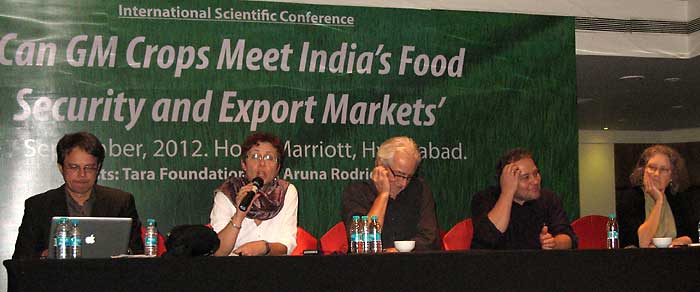
Scientific conference

Addressing a complex problem: Chairman of ENSSER Angelika Hilbeck speaking a Scientific Conference on Advancing the Understanding of Biodiversity. Photo: Roy Mathew

India has already imposed a moratorium on Bt Brinjal considering, above all, the fact that the country enjoys a diversity of about 2000 brinjal species. (Biodiversity is of variety in genes, species and ecosystems.) Dr. Puspa Bhargava told a scientific conference organised by ENSSER, and hosted by the Tara Foundation and Aruna Rodrigues, in Hyderabad last week that the moratorium should be extended to all GM trials in the country.

Scientists are worried about contamination of Western Ghats, the store house of India’s biodiversity along with the Himalayas, by artificially introduced genes as result of GM trials. So, it is imperative that we wait and watch whether humans can have control over the technology while allowing laboratory studies.  Otherwise, even our Ayurvedic System of medicine could be in peril if drug companies start genetic experimentation.

It seems that the peers of Ayurveda were even aware of genetic diversity as texts mentioned importance of collecting plants from certain locations and with specified characteristics. If our medicinal plans gets contaminated, the whole system of Ayurveda would have to be re-worked which will be an almost impossible task as it is the knowledge gathered by thousands of generations.

(To be continued)

For further reading: Scientists want inclusion of social economic considerations in risk assessment of GM crops