Achuthanandan opens a new front; only to retreat?

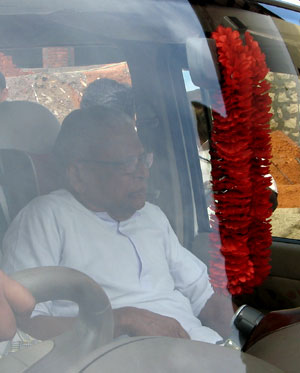
Opposition Leader V. S. Achuthanandan has opened a new front in his fight against the party faction led by Pinarai Vijayan in the Kerala unit of the CPI (M) by identifying himself with the cause of the party rebels at Onchiyam in Kozhikode district.

V. S. Achuthanandan

V. S. Achuthanandan

What is most striking about his latest statement made at a press conference is the comparisons made between Pinarai and S. A. Dange (chairman of the undivided communist party, 1962-64) as well as the comrades of Ochiyam and those who rebelled against the Dange line. The comparison between those who opposed Dange and those who rebelled at Ochiyam is far-fetched. However, what Achuthanandan wants to project here is his role in splitting the CPI in 1964 accusing Dange of revisionism.

However, those who think that Mr. Achuthanandan would split the party now would probably be disappointed. His words have hardly ever been followed by deeds. He is known to put two steps forward and two steps backwards, be it his Munnar mission as Chief Minister or crusade in the party.

He would find strategic and policy justifications to explain his stand in party for a, though they would not be acceptable to the opposite camp. He has already noted that it is party’s policy to bring back deserters instead of branding them as betrayers of the communist collective and renegades and preventing their eventual return.

Moreover, what better strategy is there than to identify with the slain T. P. Chandrasekharan on the run up to the by-election when the murder was bound to affect the party’s prospects at Neyyattinkara. Moreover, there is simmering anger among a section of the party cadre in the Malabar area over the murder in which the needle of suspicion is pointed to the CPI (M).  The storm being created by Mr. Achuthanandan would persuade at least many of them to stay on and fight from within the party against policy aberrations.

K. T. Thomas and Mullaperiyar

Member of the empowered committee of the Supreme Court on Mullaperiyar K. T. Thomas has stated in an interview to Malayala Manorama that the Mullaperiyar dam will stand for another 100 years.  This should surprise many.

Mullaperiyar dam

Mullaperiyar dam

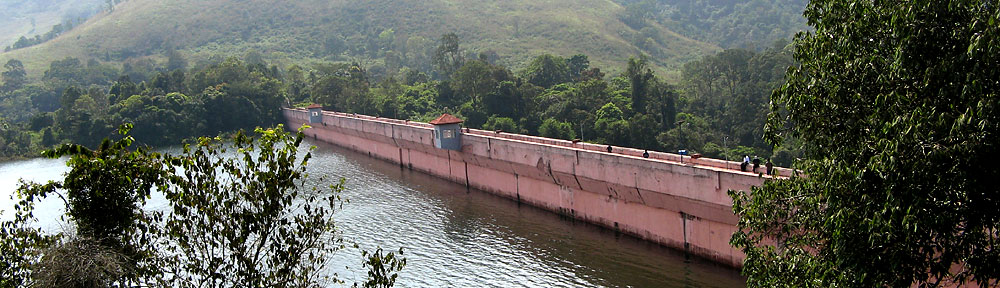
According to experts, the normal life of a well-built concrete dam is about 60 years. None could predict the life span of a composite dam like Mullaperiyar with accuracy. However, there is enough evidence about the weakness of the old structure which actually stands supported by the concrete backup built by Tamil Nadu as part of strengthening measures. The Central Water Commission itself had acknowledged the weakness of the old structure in 1979, and if the backup would support the waters, its life span is only less than 60 years. (The strengthening measures were proposed for keeping the dam in service for 30 years at water levels higher than 136 feet.) Studies by the IIT, Roorkee and IIT Delhi showed that the composite structure could not stand a once in a 100-year flood or earthquake of the magnitude of 6.5 on the Richter scale.  Mr. Thomas ignored these findings.

In his report, Mr. Thomas says that the capacity of the Idukki reservoir is 75 tmc and water level in the reservoir had never exceeded 54 tmc. Both these averments are wrong. The capacity of the Idukki reservoir is 70.5 tmc at full reservoir level. It can reach 74.4 tmc at maximum water level. However, water would have to be regulated once it reaches full reservoir level.

The water level in the reservoir had exceeded 70.5 tmc twice and the spillways had been opened. On several occasions, it had crossed 54 tmc. Then, why did Mr. Thomas quote these figures. Is it to substantiate the argument that waters from the Mullaperiyar (11 tmc) would be contained in Idukki reservoir, in case of a failure?

The argument that the former judge actually raises is that the Mullaperiyar reservoir level should be kept at 136 feet so that Idukki could get waters for power generation. This had never been the argument of Kerala and it had never got even five per cent of the water from Mullaperiyar.  (It is also notable that the former judge has suggested that an intake tunnel should be constructed at 50 feet from the base of the dam.  Even without such a tunnel Tamil Nadu is drawing almost all the waters from the dam. With such a tunnel, it will not have to spare any waters for Kerala.)

Kerala wanted the level to be kept at 136 feet for safety reasons. However, the argument that the dam is unsafe had been rejected by the Committee. So, it may be better for Kerala to change the demand for new dam as neither the Centre nor Tamil Nadu are going to agree to that given the findings of the Committee.

So, it should call for phased decommissioning of the dam on the basis of continuous evaluation of the condition of the dam by a competent body like the Dam Safety Commission. (A tunnel at a lower level as proposed by Mr. Thomas could aid this by allowing Tamil Nadu to draw water at current levels for years).  Kerala should also press for its lower riparian rights and a good share of its own waters which had been denied to it through an agreement between a weak princely State and a colonial power.

Nuclear power: consider these facts

Tamil Nadu Chief Minister J. Jayalalitha’s Trojan strategy would have seen the melt down of resistance against Kudankulam Nuclear Power Plant; but consider these facts:

Kudamkulam nuclear power plant

udamkulam nuclear power plant while under construction. Source IAEA

Japan shut down its last reactor today (May 5, 2012). Host communities and provincial governors have a say in whether they should have nuclear plants.  17 of Japan’s 54 commercial reactors had been damaged in the earthquake and tsunami last year.  The leakage at the Fukushima reactors displaced roughly 100,000 people.

If a similar accident happens in Kudankulam, around 50 lakh people in Kanyakumari, Tirunelveli and Thiruvananthapuram district would be displaced.  The Nuclear Liability Bill would not even provide for their transportation costs.

Tamil Nadu Chief Minister is demanding all the power from Kudankulam for her State. If the Centre allows that, Kerala would be taking a risk without getting any power. The situation will be similar to that at Mullaperiyar.  It is high time that Kerala’s political leadership got sensitised about another Mullaperiyar in the making.

For further reading:

Washington post report
Nuclear Liability Bill will get you Rs. 1000


Mullaperiyar: strategic failure of Kerala government

The report of the empowered committee of the Supreme Court is the result of a strategic failure from the part of the Kerala government.

The Central Water Commission was actually the opposite party in the case for Kerala. Yet, it failed to prevent those associated with the Commission from undertaking safety related assessment of the Mullaperiyar dam.  (Technical members of the Committee C.D. Thatte and D. K. Mehta were former Secretary to the Ministry of Water Resources and retired Chief Engineer, Central Water Commission respectively.)

Kerala nominated retired Supreme Court Judge K. T. Thomas to the committee. This was a strategic mistake as what Kerala needed was a man who could understand and judge technical matters and argue on technical issues.  Kerala could have better argued legal points before the Court itself instead of having a legal luminary in the committee. It seems that Mr. Thomas did not push forward any legal issues. He failed to express his views strongly on technical matters, he being not a technical expert.  The result is the finding by essentially by Mr. Thatte and Mehta that the dam is structurally and hydrologically safe.

In the process, they ignored studies by IIT, Roorkie and IIT Delhi which had found that the dam was not structurally and hydrologically safe.  It was true that they had done the studies in a hurry and this affected its quality. However, there were irrefutable facts in their reports which the twosome has ignored.

Core sampling and its examination for strength was important in determining whether the dam was strong enough to withstand earthquakes and higher water levels.  During drilling, proper samples could not be obtained except from the foundation, apparently because portions of the old dam were hollow.  However, it seems that the committee submitted its report before the results of the study came in.  Kerala should have insisted that the report should wait the finding of the study.

Now, Kerala would find it extremely difficult to argue technical points before the Court. The Court cannot be convinced easily that the dam is unsafe, as judges would attach value to the report of the empowered committee.

It may also be worth examining why Kerala made strategic mistakes.  The government had always failure to act in time and in a coordinated manner. Its engineers did not see eye-to-eye on several matters. Its lawyers were not often briefed properly by its engineers. Politicians concentrated on playing to the gallery and there were often allegations against both the politicians and officials who were in charge of fighting the Mullaperiyar case over the past two decades.  It is also worth noting that Tamil Nadu Chief Minister J. Jayalalithaa herself had alleged that Kerala politicians had land in areas irrigated by waters from Mullapeiryar.

For further reading:
Mullaperiyar– in search of truth
Mullaperiyar and dam safety
Mullaperiyar dam dispute
http://keralaviews.wordpress.com/tag/mullaperiyar/

Endosufan controversy: truth is not easy to decipher

Whether there is any substance in the controversy over the letter written by Principal Secretary (Health) to the Community Medicine Department of Kozhikode Medical College asking, essentially, whether they are willing to make any amends to the report of their studies on endosulfan is not easy to determine.

Chief Minister Oommen Chandy has denied any wrong-doing by officials of the Health Department in their response to legal notice on endosulfan and that no minister had seen the file or the correspondence.  Even if a Minister has given a directive, the Health Secretary has seen to it that the letter is carefully worded after obtaining the advice of the Law Department.  The letter written by the Health Secretary is reproduced below.

The wordings like the use of ‘impediment’ may suggest a bias in favour of endosulfan manufacturers.  However, the net result of final decision communicated to Mr. Ganesan strengthens the legal case in favour of ban on endosulfan.  From the letter (reproduced below) read with earlier communication to the Department, it would appear that the government is upholding the results of the studies after due process and had shown no bias towards the Department.  It could be that the Principal Secretary Rajiv Sadanandan acted intelligently.

The only problem with the letter is that the date appears to have been over-written. Was it sent before the controversy broke out or after that?

Such doubts arise because the history of the UDF government headed by Oommen Chandy was not one of unblemished support to the victims of endosulfan. As pointed out in an earlier post, the Agriculture Secretary of the Government had signed the report of the Mayee Committee (conclusions are reproduced below) hardly a fortnight before  Mr. Chandy set out to tour the affected villages of Kasaragod district promise solace to the victims in 1984.

Recommendations of Mayee Committee

Sparring between PSC and Government

The PSC and the government are at loggerheads over extension of ranked lists for appointments to various posts in government.  It was usual for the Cabinet to recommend extension of various rank lists for different reasons and PSC used to accept them routinely. This time the left- dominated Board of the PSC has refused to accept the recommendations of the government, leading to almost a show down between the autonomous PSC and the government. Obviously, politics is behind the decision of the PSC though there is some merit in PSC’s stand.

The government wants extension of the ranked lists because of its decision to discontinue unified retirement date introduced by the previous government and fix 56 years as the age of superannuation.  The extension will offset the disadvantage arising from the decision to those in the live ranked lists of PSC.  However, it is notable that for the youth seeking employment in government service and who are yet to be in a PSC list, the decision would offset their entry by about one year. This is partly the result of the previous government’s decision also as the decision by the previous and present governments effectively increased the retirement age by one year in two steps.

The consequence of this to new applicants would be that they would enter government service one year later, on an average, and retire a year later. So, the average age of government servants would shift upwards and the youth who have already passed their examinations would have a longer wait for job.

However, the general consequence of extension of ranked lists is that the quality of those entering into government service would come down. A PSC list is expected to be live for only one year. However, if new list is not published, a list will be valid up to three years. This is what is being extended to up to 4.5 years now. Over such a long period, the best candidates in the list would get other jobs. Finally, those getting advice in the fourth year would be those who would not have normally got into government service.

If the PSC struck to the one year norms, the government would be getting the best of the lot and at an early age. However, the PSC is so understaffed and so bureaucratic that this hardly ever happens. New lists are always delayed. And this is the best excuse for government to seek extension of rank lists when they come under pressure from those in the live lists.


Endosulfan: the denouement

The Supreme Court has finally said it: no more studies are needed (to establish the link between the broad spectrum pesticide endosulfan and the health effects on people).  This is apparently the results of work done by Dr. Mohammed Aisheel and others in compiling a large bibliography of studies on endosulfan besides recent studies by Kerala government and various research establishments.

The studies showed   that the endosulfan could cause large number of diseases reported from Kasaragod district of Kerala and Dakshina Kannada district of Karnataka and the mechanism of action of the pesticide in human body. Studies may still be needed to conclusively establish that some of the diseases manifesting in the district is indeed caused by endosulfan.

endosulfan

A severely handicapped child who is getting assistance as an endosulfan victim

That is, while endosulfan as cause of many diseases is established, it may be more difficult to establish that the very diseases in a person or group are caused by endosulfan. The disease can be caused by other factors and these needed to be eliminated to prove the latter. However, the Supreme Court is satisfied with the evidence at hand and ordered continuing of the nation-wide ban on endosulfan on the basis of the precautionary principle.

It is notable that the Union Agriculture Commissioner maintained in his report prepared for the committee appointed by the Supreme Court that said that the problems were confined to Kerala and Karnataka and recommended ban only in these two States.  They had even taken the line of the endosulfan manufacturers that endosulfan is safe to pollinators which goes against the findings of the Kerala Agriculture University.

It is also notable that much of the data and studies linking endosulfan to various diseases were available when the O.P. Dubey and C. D. Mayee committees appointed by the Central government declared that no link had been established between the use of endosulfan in the estates of Plantation Corporation of Kerala and the health problems reported from the Padre village. The Director of Agriculture of Kerala Government, who was a member of the Mayee committee, signed the committee report. This was despite the findings of the expert committee (headed by Dr. P. K. Sivaraman), appointed by the Kerala government, which was before him.  The report was submitted in August 2003 and the Director signed the report in December 2004, hardly ten days before then Chief Minister Oommen Chandy visited Kasaragod promising succor to the endosulfan victims.

The victims are yet to get the package promised to them except for sanction given for a project funded by National Bank for Agriculture and Rural Development (NABARD). Though it has been shown that the aerial spraying of endosulfan was done disregarding the rules and without valid requirement for pest management, no action had been taken against any of the officials culpable of poisoning entire villages.

Endosulfan: spray of death
Endosulfan: brochure published by Kerala Government
Endosulfan: a Kerala story


Administering drugs, instead of controlling mosquitoes

The government and local bodies, which could not control mosquitoes or supply mosquito nets to the poor, will again embark on mass administration of drugs for filariasis later this month, assuming that an unknown percentage of the population is infected.  (Official documents claims that the prevalence of microfilaria towards the end of last century was about 15 per cent.  Current figures are not known.)

This is somewhat like administering paracetamol to the entire population during monsoon assuming that many people have contacted fever. No one knows whether repeated administration of drugs (diethyl carbamazene citrate-DEC and albendazole) year after year would reduce its effectiveness. Filaria may develop resistance over a long period, going by the evolutionary principle. WHO had conducted a study in 2008 to find out whether the effectiveness of albendazole had decreased following mass administration among children in Nepal. (Though the study has been reported on the WHO Website, the results could not be found.)

However, the main concern is regarding the ethics and use of funds.  It is against medical ethics to administer potent drugs to people with no disease for which the drug is a cure. Moreover, principles like that a doctor should see the patient and administer drugs as per body weight is dispensed with. This also means that advisable precautions are not taken. (See http://www.icm.tn.gov.in/drug%20formulary/ANTIINFECTIVE%20DRUGS.htm)

Mayor swallows pills

Thiruvanathauram Mayor K. Chandrika takes the pills at inaugural of Mass Drug Administration

Drugs for entire families are delivered together by volunteers even to children if the parents are not at home. There is the risk of children consuming the drug indiscriminately, resulting in overdose. Warning against use of the drug by infants, pregnant women and the elderly may not always reach them. Both DEC and albendazole are prescription drugs which are to be administered by doctors and supplied through pharmacists.

The mechanism of action of the diethylcarbamazene citrate against microfilaria (the causative parasitic organism of filariasis) is not known.  Latest studies show that the unusual and novel therapeutic effect on the cell walls of the parasite which is yet to be fully studied. The drug has effect on human neutrophil and eosinophil. (See http://www.ncbi.nlm.nih.gov/pmc/articles/PMC185347/pdf/aac00198-0157.pdf)

Doctors are not even sure of the dosage (The earlier recommendation was for administration of diethyl carbamazene citrate for 12 days. Now the prescription is just one dose of the drug combination). Still, it is being administrated to the entire population (excluding three districts in Kerala) though none can be sure of long term effects of taking the drug year after year.   Albendazole can cause birth defects in newborns, if taken during pregnancy, according to authoritative sources. (See http://www.nlm.nih.gov/medlineplus/druginfo/meds/a610019.html)

Reaction to diethyl carbamazene citrate can range from dizziness, nausea and vomiting to skin rashes, fever and even anaphylaxis (which can be fatal). The latter reactions caused by dead microfilaria rather than the drug occur only if microfilaria is present in the body in large numbers and anaphylaxis will occur only in people allergic to dead microfilaria. ( A case of such reaction was reported from Trivandrum Medical College years ago.) Few reports of such incidents in Kerala indicate the prevalence of microfilaria is actually lower than projected.

The practice of mass drug administration against filariasis had been started about a decade ago. The claim was that the disease could be eliminated in five years with 65 per cent coverage of the endemic areas. This did not happen and the project is now being extended with new target of 2015 for elimination. If the money spent on mass drug administration was spent on improving primary health care, it could have helped in the treatment of many diseases.

Fogging

Fogging for mosquito control

The prevalence of filariasis, it may be noted, is actually the results of lack primary health care. Diseases like elephantiasis, the advanced form of filariasis, occur in society because of absence of proper health care. For filariasis could be cured, if detected at its early stages, and progression into elephantiasis could surely be prevented. Doctors can easily advice tests to confirm filariasis at early stage when swelling of testis or breasts is noticed.

Elephantiasis is absent among upper strata of society because they get early treatment. Incidence of filarisis is also lower among them because of use of mosquito nets and other measures to prevent mosquito bites. If the government provided mosquito nets to the poor, instead of drugs for cure, not only filariasis but also other vector borne diseases such malaria, Dengue fever, chikungunya could have be prevented to a great extent.

Poisoned food

Every man has a right to food as implicit in the right to employment. However, this right is being denied not only to the poor but also to others also these days.

Almost all the food items sold in public markets are poisoned. The situation usually goes beyond mere adulteration. High levels of red and yellow category pesticides including organo-chlorine and organo phosphorous pesticides found in vegetables and fruits. There are reports from Tamil Nadu that some farmers cultivate vegetables differently for own use and sale.Mangoes

Pesticide is applied at every stage on vegetables for sale. Coconut too has become unsafe with the use of aluminium phosphide.  Some of these applications are quite unnecessary or by way of extreme action to prevent pest attack. The consumption of vegetables treated thus has resulted in high incidence of various diseases, including impotency and kidney failure.

Pesticide is being applied even on fish to keep away flies. Fomalin is being used to prevent rotting.  Milk also comes with pesticides and formalin besides a number of chemicals used for preservation including antibiotics. These can cause serious health problems. Very few dairies supply milk that is not dangerous.

Similar is the case with meat. Quality checks are only in paper while producers and traders use all sorts of methods to increase yield.  The government had been failing to act the new food adulteration law, citing various excuses including absence of laboratories for routine checks.  The real reason for lack of enforcement is, however, the nexus among traders, politicians and officials.